
Many small and medium-sized business owners struggle to implement structured leadership coaching workflows that genuinely drive growth and operational efficiency. Without a clear process, coaching efforts become sporadic, unmeasurable, and fail to deliver lasting results. This guide provides a comprehensive, step-by-step approach to designing and executing a leadership coaching workflow tailored specifically for SMBs. You’ll discover proven methodologies, practical implementation strategies, and measurement frameworks that transform leadership capabilities into tangible business outcomes. By following this structured approach, you can boost revenue, enhance team performance, and build sustainable leadership capacity that scales with your business.
Table of Contents
- Key takeaways
- Understanding leadership coaching workflows
- Preparing your leadership coaching workflow
- Executing the leadership coaching workflow
- Verifying and sustaining leadership coaching success
- Unlock growth with expert leadership coaching services
- What is the typical duration of a leadership coaching workflow?
- How can SMBs measure the effectiveness of leadership coaching?
- What are common challenges when implementing leadership coaching workflows?
- How can leaders ensure coaching benefits last over time?
Key Takeaways
| Point | Details |
|---|---|
| Workflow drives growth | A structured leadership coaching workflow links clear business goals to measurable outcomes, helping SMBs boost revenue, improve performance and strengthen retention. |
| Core coaching models | GROW, RARA and ACS provide versatile frameworks that coaches blend to fit leaders’ needs and learning styles. |
| Clear goals matter | Defining specific, measurable outcomes guides coaching conversations and keeps progress visible for SMBs. |
| Assessments sustain capability | Frequent assessments and reinforcement prevent skill fade and help keep coaching aligned with business priorities. |
Understanding leadership coaching workflows
A leadership coaching workflow is a structured, repeatable process designed to guide business leaders through self-discovery and capability development. Unlike consulting, where experts provide solutions, or mentoring, where experienced leaders share wisdom, coaching leadership focuses on inquiry-based questioning that helps leaders uncover their own answers. This distinction matters enormously for SMB owners who need to build genuine problem-solving capacity rather than dependency on external advisors.
Three core methodologies form the foundation of effective coaching workflows. The GROW model structures sessions around Goal setting, Reality assessment, Options exploration, and Will to act. RARA takes a different approach through Recognize patterns, Ask powerful questions, Reframe perspectives, and Actions planning. The ACS framework emphasises Assess current state, Challenge assumptions, and Support implementation. Each model serves different coaching scenarios, and skilled coaches often blend elements from multiple frameworks based on the leader’s needs and learning style.
The environment you create during coaching sessions dramatically influences outcomes. Leaders must feel psychologically safe to explore vulnerabilities, admit uncertainties, and test new thinking without judgement. This trust-based foundation enables the honest reflection necessary for breakthrough insights. For SMB leaders juggling multiple responsibilities, coaching provides rare space for strategic thinking away from daily operational pressures.
Effective coaching directly improves decision-making quality and team management capabilities. When leaders develop stronger self-awareness and clearer thinking processes, those benefits cascade throughout the organisation. Team members experience more consistent leadership, clearer direction, and better support for their own development. Coaching for SMEs growth becomes a force multiplier that elevates entire organisational performance rather than just individual capability.
Pro Tip: Record key insights from coaching sessions in a dedicated journal. Reviewing these notes before subsequent sessions accelerates progress by maintaining continuity and highlighting patterns in your leadership challenges and growth areas.
Preparing your leadership coaching workflow
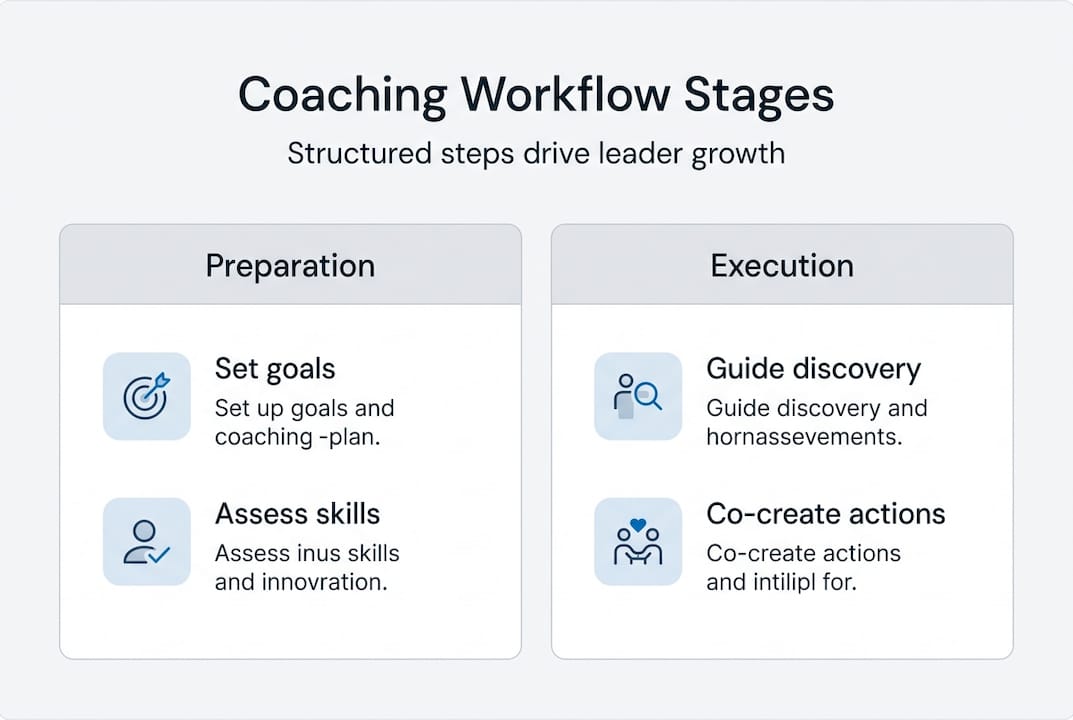
Successful coaching workflows begin long before the first session. You must identify clear, measurable goals aligned directly to business priorities. Vague aspirations like “become a better leader” lack the specificity needed to guide coaching conversations or measure progress. Instead, define concrete outcomes such as “reduce team turnover by 15% within six months” or “delegate three major operational responsibilities to department heads by quarter end.” These tangible targets create focus and accountability throughout the coaching journey.

Initial assessments establish your current leadership capabilities and specific challenges. Leadership assessments include 360-degree feedback, personality inventories, skills evaluations, and stakeholder interviews. This diagnostic phase reveals blind spots, confirms strengths, and identifies priority development areas. For SMB leaders, assessments should balance comprehensiveness with time efficiency, typically requiring 2-3 hours of weekly commitment during the active coaching period.
Resource constraints represent a real consideration for smaller businesses. Traditional coaching programmes designed for corporate executives often assume unlimited time and budget availability. SMB-adapted workflows might feature bi-weekly rather than weekly sessions, shorter engagement periods, or group coaching formats that reduce per-person costs whilst maintaining effectiveness. The key is matching coaching intensity to your actual capacity for implementing changes between sessions.
Session frequency and duration require careful calibration. Weekly 60-90 minute sessions work well during intensive development periods, whilst bi-weekly sessions suit maintenance phases or leaders with limited availability. Spacing sessions too far apart reduces momentum and allows old patterns to reassert themselves. Clustering sessions too closely prevents adequate time for implementing action plans and observing results. Most effective SMB coaching workflows run 3-6 months with flexibility to extend based on progress and emerging needs.
Stakeholder engagement ensures coaching aligns with team dynamics and organisational context. Your leadership development doesn’t occur in isolation; it affects everyone you work with. Brief conversations with key team members, business partners, or board members can reveal how others experience your leadership and what changes would create the greatest positive impact. This input enriches goal setting and helps you prioritise development areas with maximum organisational benefit.
Pro Tip: Schedule coaching sessions at times when you’re mentally fresh and can arrive fully present. Avoid booking sessions immediately after stressful meetings or when facing tight deadlines that will fragment your attention and reduce coaching effectiveness.
Executing the leadership coaching workflow
Each coaching session follows a deliberate structure that maximises insight and action. Begin by establishing a clear agenda collaboratively with your coach. Review progress on previous commitments, identify the most pressing current challenge, and agree on the session’s primary focus. This agenda-setting process typically takes 5-10 minutes but ensures the limited session time addresses your highest-priority needs rather than wandering through surface-level topics.
The core of effective coaching involves facilitating self-discovery through powerful questioning and active listening. Your coach asks open-ended questions that prompt deeper reflection: “What’s really driving this situation?” “What would success look like?” “What’s stopping you from taking that action?” These inquiries help you examine assumptions, explore alternatives, and connect insights across different business challenges. The coach’s role is holding space for your thinking process, not providing answers or directing solutions.
Co-creating action plans transforms insights into tangible next steps. Before each session ends, you identify 2-4 specific actions you’ll complete before the next meeting. Effective action plans include measurable outcomes, clear deadlines, and identified obstacles you might encounter. For example, rather than “improve team communication,” a strong action plan states “conduct 30-minute one-on-one meetings with each department head by Friday, using the feedback framework we discussed, to understand their current communication challenges.”
Follow-up on commitments maintains momentum and builds accountability. Each session begins by reviewing your progress on previous action plans. This review isn’t about judgement when you fall short; it’s about understanding what prevented completion and what that reveals about underlying patterns or obstacles. Coaching provides 7x ROI and 23% revenue growth precisely because this accountability loop ensures insights translate into sustained behavioural change rather than fleeting good intentions.
Adapting coaching to evolving challenges keeps the workflow relevant as your business and leadership context shifts. A challenge that seemed paramount in month one may resolve or become less critical by month three. Effective coaching workflows remain flexible, regularly reassessing priorities and adjusting focus areas based on your current needs and emerging opportunities. This responsiveness distinguishes coaching from rigid training programmes that follow predetermined curricula regardless of actual business circumstances.
| Session phase | Objective | Example questions | Outcome |
|---|---|---|---|
| Agenda setting | Establish focus and priorities | What’s most important to address today? What progress have you made? | Clear session direction aligned to current needs |
| Exploration | Deepen understanding of challenges | What’s really happening here? What patterns do you notice? | Enhanced self-awareness and insight |
| Options generation | Identify possible solutions | What options do you see? What else could you try? | Multiple potential pathways forward |
| Action planning | Commit to specific next steps | What will you do by our next session? What might get in the way? | Concrete commitments with accountability |
Pro Tip: Keep a running list of questions or challenges that arise between coaching sessions. This practice ensures you maximise session value by addressing accumulated insights rather than scrambling to identify topics when the session begins.
Verifying and sustaining leadership coaching success
Measuring coaching effectiveness requires tracking both quantitative business metrics and qualitative leadership indicators. Revenue uplift, profit margin improvements, and employee retention rates provide hard evidence of coaching impact. Complement these numbers with leadership confidence assessments, 360-degree feedback scores, and team engagement surveys that capture the softer dimensions of leadership development. Most SMBs see measurable improvements within 3-4 months, with 96% of coached leaders reporting better performance and 92% experiencing increased confidence.
Warning signs indicate when coaching workflows aren’t delivering expected results. Unclear or constantly shifting goals suggest inadequate preparation or misaligned expectations. Poor coach-client chemistry manifests as surface-level conversations, reluctance to share challenges openly, or feeling misunderstood. Missing accountability shows up when action plans consistently go incomplete without exploration of underlying obstacles. If you notice these patterns, address them immediately rather than continuing ineffective coaching that wastes time and resources.
Reinforcement methods prevent the 60-70% skill fade that occurs without ongoing support. Schedule quarterly follow-up sessions after formal coaching concludes to review progress and address new challenges. Establish peer coaching relationships with other business owners facing similar leadership journeys. Embed new behaviours into company systems and processes so they become standard operating procedure rather than personal habits requiring constant conscious effort. Regular self-assessment using the same tools from your initial evaluation tracks whether gains persist over time.
Cognitive coaching benefits include improved strategic thinking, better decision-making frameworks, and enhanced problem-solving capabilities. Affective benefits encompass increased confidence, reduced stress, and stronger emotional regulation under pressure. SMB leaders typically need both dimensions, as running a smaller business demands both sharp analytical skills and emotional resilience. Effective coaching workflows address this full spectrum rather than focusing exclusively on either thinking skills or emotional intelligence.
| Common pitfall | Impact | Solution |
|---|---|---|
| Unclear goals | Unfocused sessions with minimal progress | Define 2-3 specific, measurable objectives before starting |
| Wrong coach fit | Surface conversations without real breakthroughs | Interview multiple coaches; prioritise chemistry and relevant experience |
| No accountability | Insights without implementation | Establish clear action plans with follow-up reviews |
| Ignoring team dynamics | Leadership changes that don’t fit organisational culture | Include stakeholder input in goal setting and progress reviews |
| Insufficient frequency | Lost momentum between sessions | Schedule sessions close enough to maintain continuity |
Sustaining coaching benefits requires integrating new leadership practices into your daily routines. Block time for strategic thinking rather than letting operational urgencies consume every hour. Implement regular one-on-one meetings with direct reports using coaching questions rather than directive management. Build reflection practices that help you notice patterns and adjust your approach proactively. These embedded habits ensure coaching delivers lasting transformation rather than temporary improvement that fades once formal sessions end.
Unlock growth with expert leadership coaching services
Transforming your leadership capabilities accelerates business growth and operational efficiency in ways that isolated tactical improvements cannot match. Professional coaching provides the structured support, accountability, and expertise that turns leadership development from an abstract aspiration into measurable business results. When you invest in proven coaching methodologies tailored to SMB realities, you’re not just improving your own capabilities; you’re building organisational capacity that compounds over time.
Explore how coaching for SME growth delivers the strategic guidance and practical frameworks you need to overcome specific business challenges. Discover why investing in coaching generates returns far exceeding the initial commitment through improved decision-making, stronger teams, and accelerated revenue growth. Access growth strategies for SMBs that combine leadership development with operational excellence for sustainable, profitable scaling.
What is the typical duration of a leadership coaching workflow?
Most leadership coaching workflows run 3-6 months with sessions occurring weekly or bi-weekly. This timeframe allows sufficient repetition to embed new behaviours whilst maintaining momentum and accountability. SMBs often benefit from shorter, more intensive engagements followed by quarterly maintenance sessions rather than extended low-frequency coaching that dilutes impact.
How can SMBs measure the effectiveness of leadership coaching?
Track both quantitative metrics like revenue growth, profit margins, and employee retention rates alongside qualitative indicators such as leadership confidence surveys and 360-degree feedback scores. Establish baseline measurements before coaching begins and reassess at 3-month intervals. Most businesses see measurable improvements within the first quarter, with benefits compounding over subsequent months as new leadership practices become habitual.
What are common challenges when implementing leadership coaching workflows?
Typical obstacles include unclear goals that create unfocused sessions, poor coach-client fit that prevents genuine breakthroughs, lack of accountability that allows action plans to go incomplete, and ignoring team dynamics that makes leadership changes feel disconnected from organisational reality. Address these by defining specific measurable objectives upfront, interviewing multiple coaches to ensure strong chemistry, establishing clear follow-up processes, and including stakeholder input throughout the coaching journey.
How can leaders ensure coaching benefits last over time?
Implement regular follow-up sessions after formal coaching concludes, typically quarterly, to review progress and address emerging challenges. Establish peer coaching relationships with other business owners for ongoing support and accountability. Embed new leadership practices into company systems, processes, and routines so they become standard operating procedure rather than personal habits requiring constant conscious effort. Continuous reinforcement prevents the 60-70% skill fade that occurs when coaching gains aren’t actively maintained through deliberate practice and environmental support.

