
Most British and Australian SME owners underestimate how rapidly expert coaching can translate to greater profitability and smoother team operations. In a competitive climate where even minor efficiency gains make a difference, tailored coaching is becoming a critical advantage. This article unpacks what coaching truly means for British businesses, cutting through common myths and outlining how a purpose-driven approach can deliver measurable results that consulting or mentoring alone rarely achieve.
Table of Contents
- Defining Coaching For SMEs And Key Misconceptions
- Types Of Coaching For SME Growth And Innovation
- How Coaching Works To Unlock Leadership And Strategy
- Measurable Impacts: Profitability, Efficiency, And Team Performance
- Common Mistakes And Pitfalls Facing SME Owners
- Comparing Coaching With Alternative Business Support
Key Takeaways
| Point | Details |
|---|---|
| Coaching is Distinctive | Unlike consulting or mentoring, coaching empowers SME owners through collaborative self-discovery and performance improvement. |
| Types of Coaching Matter | Executive, team, and performance coaching each play a crucial role in enhancing leadership, cohesion, and individual skills respectively. |
| Measurable Impacts Exist | Coaching leads to significant benefits in profitability, operational efficiency, and team performance, exceeding traditional training methods. |
| Avoid Common Pitfalls | Financial mismanagement, poor adaptability, and digital resistance are prevalent challenges where coaching can provide strategic guidance and support. |
Defining coaching for SMEs and key misconceptions
Business coaching represents a targeted professional development approach specifically designed to help small and medium-sized enterprises (SMEs) unlock their growth potential. Unlike traditional consulting or mentoring, coaching focuses on empowering business owners through structured performance improvement strategies.
The fundamental distinction lies in coaching’s unique methodology. While mentoring involves knowledge transfer and consulting provides direct solutions, coaching operates as a collaborative partnership. Coaches work alongside business owners to facilitate self-discovery, challenge existing thinking patterns, and support sustainable behavioural transformations. Coaching conversations are purposefully non-directive, targeting specific performance goals within defined timeframes.
Common misconceptions about coaching often stem from misunderstanding its core purpose. Many SME owners erroneously believe coaching is exclusively for senior executives or struggling businesses. In reality, coaching serves proactive entrepreneurs seeking strategic guidance, performance enhancement, and personal leadership development. It is not therapy, counselling, or a remedial intervention, but a progressive tool for continuous professional growth.
Pro tip: When selecting a business coach, prioritise professionals with demonstrated experience in your specific industry and a track record of driving measurable performance improvements.
Here is a comparison of coaching, mentoring, and consulting for SMEs:
| Approach | Primary Focus | Interaction Style | Typical Outcome |
|---|---|---|---|
| Coaching | Leadership and behaviour | Non-directive partnership | Lasting growth and self-discovery |
| Mentoring | Knowledge sharing | Advisory relationship | Skills transfer and guidance |
| Consulting | Problem-solving | Expert-driven solutions | Implemented recommendations |
Types of coaching for SME growth and innovation
Coaching for small and medium enterprises encompasses a diverse range of strategic approaches designed to drive organisational growth and innovation. The SME Training and Coaching Loop represents a sophisticated methodology that integrates individual coaching sessions with targeted classroom training over six to nine months, addressing critical business development needs.
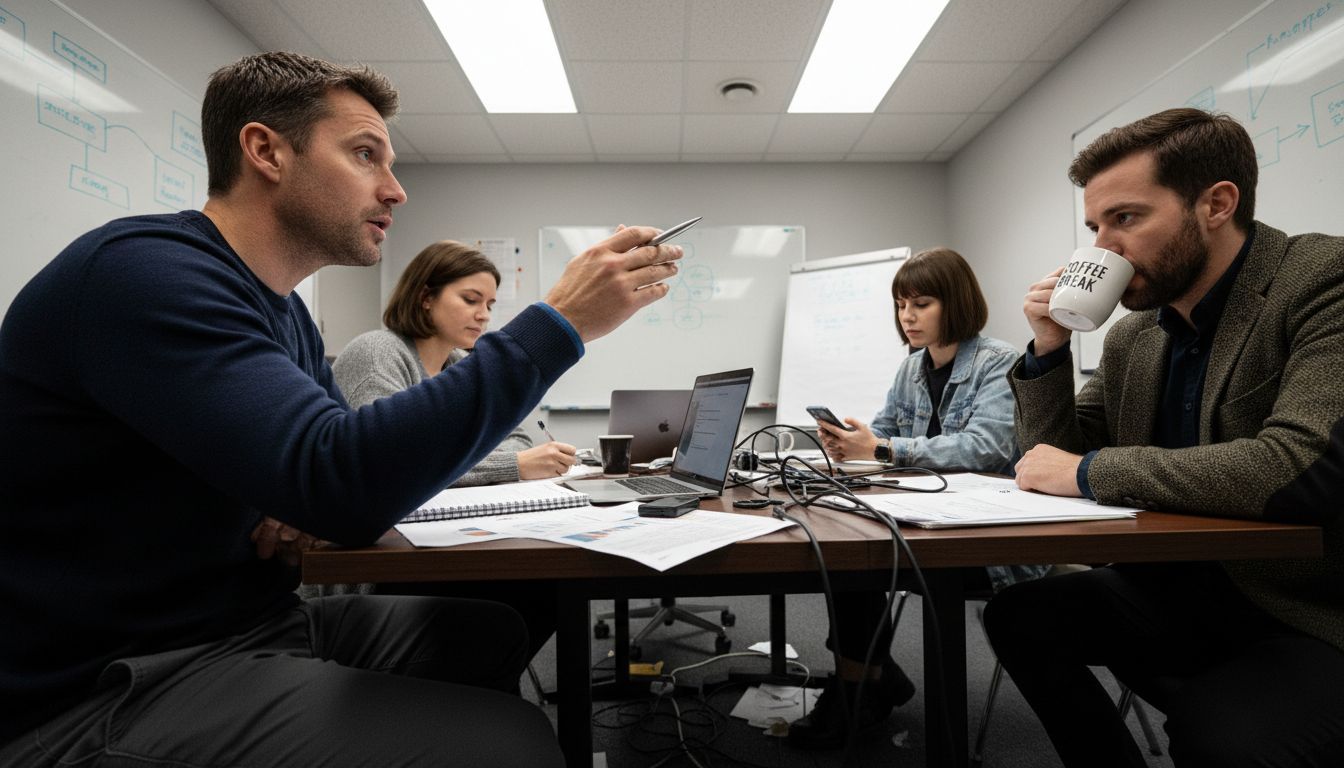
Three primary types of coaching emerge as particularly impactful for SMEs: executive coaching, team coaching, and performance coaching. Executive coaching focuses on senior leadership development, helping business owners enhance strategic decision-making and personal effectiveness. Team coaching aims to improve collective performance, alignment, and collaborative capabilities across organisational units. Performance coaching targets individual skill enhancement, productivity improvements, and professional development for key personnel.
Each coaching type serves a unique purpose in supporting SME growth. Executive coaching helps leaders develop vision and strategic thinking, team coaching builds organisational cohesion and communication, and performance coaching ensures individual team members continuously develop their professional capabilities. The ultimate goal is creating a holistic approach to business development that simultaneously addresses leadership, collective performance, and individual potential.
Pro tip: Consider implementing a blended coaching approach that combines different coaching types to create a comprehensive organisational development strategy.
How coaching works to unlock leadership and strategy
Leadership coaching operates as a transformative process that fundamentally reshapes how business leaders approach strategic challenges and personal development, generating profound organisational improvements. This approach goes beyond traditional management training by creating a dynamic, personalised environment where leaders can explore their potential, challenge existing assumptions, and develop more nuanced strategic capabilities.
The coaching mechanism fundamentally works through a structured yet flexible framework of assessment, challenge, and support. Strategic self-awareness becomes the cornerstone of this process, enabling leaders to understand their strengths, limitations, and unconscious behavioural patterns. Coaches facilitate this journey by creating a trusting relationship that simultaneously challenges and supports leadership growth, helping business owners develop more adaptive, innovative approaches to organisational strategy.
At its core, leadership coaching drives change by enhancing leaders’ self-efficacy and decision-making capabilities. Through targeted interventions, coaches help business leaders align their personal vision with broader organisational objectives, creating a more integrated and purposeful approach to strategic planning. This process involves developing critical skills such as emotional intelligence, strategic thinking, and the ability to navigate complex business environments with greater agility and confidence.
Pro tip: Invest in regular reflective coaching sessions that explicitly map your personal leadership development against your organisation’s strategic goals.
Measurable impacts: profitability, efficiency, and team performance
Meta-analyses of workplace coaching reveal substantial quantifiable benefits for small and medium enterprises, transforming organisational performance across multiple critical dimensions. These impacts extend far beyond traditional training approaches, offering strategic interventions that directly influence financial outcomes, operational effectiveness, and workforce capabilities.
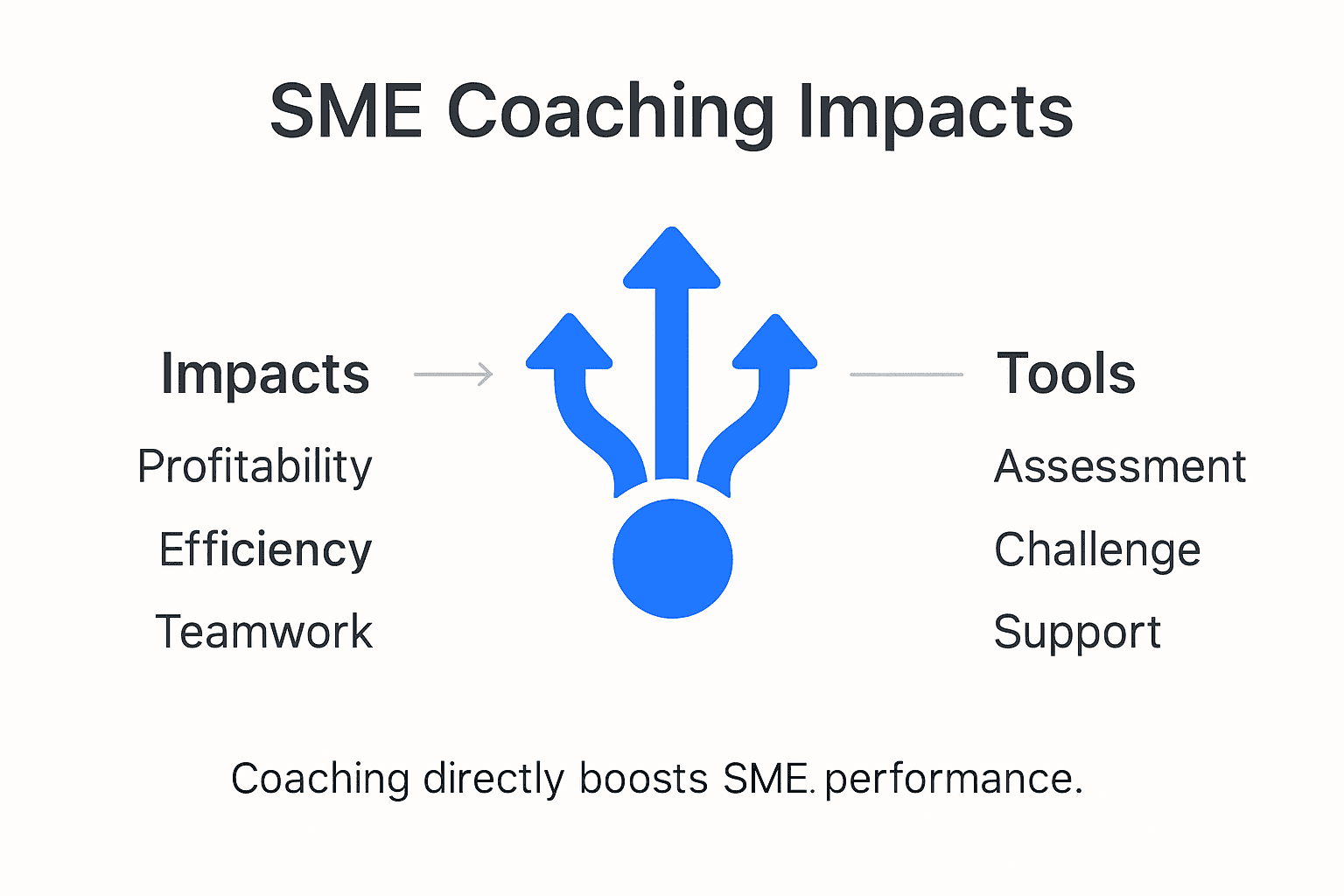
The most significant measurable impacts emerge in three core areas: profitability, operational efficiency, and team dynamics. Coaching interventions systematically enhance employee engagement, develop critical skills, and optimise work behaviours that collectively contribute to bottom-line improvements. By fostering a more adaptive, collaborative workplace environment, businesses can unlock performance potential that traditional management methods often overlook.
Systematic research demonstrates that coaching drives tangible organisational gains through improved productivity, leadership capabilities, and strategic decision-making. Empirical evidence suggests that targeted coaching initiatives can generate measurable improvements in team collaboration, individual performance, and overall organisational agility. These benefits translate into enhanced competitive positioning, more resilient operational strategies, and a more responsive approach to market challenges.
Pro tip: Implement quarterly performance assessments that directly correlate coaching investments with specific organisational key performance indicators to quantify and validate your coaching strategy’s impact.
Common mistakes and pitfalls facing SME owners
Small and medium enterprise owners frequently encounter strategic challenges that can significantly undermine their business sustainability and growth potential. These pitfalls often emerge from complex combinations of financial management limitations, strategic planning shortcomings, and resistance to critical organisational transformations.
The most prevalent mistakes cluster around three fundamental areas of business vulnerability: financial management, strategic adaptability, and technological readiness. Many SME owners struggle with maintaining adequate liquidity, underestimating competitive market dynamics, and failing to invest in workforce skill development. These challenges become particularly acute during external economic disruptions, where businesses with rigid operational models find themselves increasingly vulnerable to systemic market shifts.
Digital transformation represents another critical domain where SMEs frequently stumble. Business owners often perceive technological investments as optional rather than fundamental, leading to delayed modernisation efforts that progressively erode competitive positioning. The most successful enterprises proactively integrate emerging technologies, continuously upskill their workforce, and develop agile business models capable of rapid strategic recalibration in response to changing market conditions.
Summary of common SME pitfalls and how coaching addresses them:
| Common Pitfall | Business Risk | How Coaching Helps |
|---|---|---|
| Weak financial management | Cash flow issues, instability | Promotes strategic planning |
| Poor adaptability | Lost market relevance | Fosters agile thinking |
| Resistance to technology | Competitive disadvantage | Encourages innovation |
Pro tip: Conduct a comprehensive quarterly review of your business’s technological infrastructure, competitive landscape, and skill development strategies to identify and mitigate potential operational vulnerabilities.
Comparing coaching with alternative business support
Business support services for SMEs represent a diverse ecosystem of developmental interventions, each offering unique approaches to organisational growth and improvement. Unlike traditional support mechanisms, coaching distinguishes itself through a profoundly personalised and transformative methodology that goes beyond simple skill transfer or direct problem-solving.
The fundamental differences between coaching and alternative support services become evident in their core methodological approaches. Mentoring typically involves experienced entrepreneurs sharing knowledge and advice, while consulting provides direct solutions to specific business challenges. In contrast, coaching operates as a collaborative, empowerment-driven process that encourages business owners to discover their own strategic solutions through guided questioning and reflective practices.
Technical assistance, training programmes, and financing facilitation each play crucial roles in business development, but they fundamentally differ from coaching in their fundamental objectives. Where these alternative supports focus on immediate skill acquisition or financial interventions, coaching targets deeper behavioural transformations, leadership development, and sustainable personal growth. This approach enables SME owners to build long-term adaptive capabilities, rather than merely addressing surface-level operational challenges.
Pro tip: Evaluate your business support strategy holistically, recognising that different interventions can complement each other and selecting approaches that align with your specific developmental needs.
Unlock Your SME’s True Potential with Expert Coaching
The article highlights that many small and medium-sized enterprise owners face challenges such as weak financial management, poor adaptability, and resistance to technology—all crucial obstacles to growth and profitability. If you are seeking to boost strategic planning, enhance leadership capabilities, and drive measurable results like increased profitability and improved team performance, professional coaching can make a transformative difference. Concepts like executive coaching, performance improvement, and fostering agile thinking are key to overcoming these obstacles and unlocking sustainable business success.
At Summit SCALE, we specialise in empowering entrepreneurs and business owners just like you through tailored coaching services designed to generate more time, money, and personal freedom. Our approach focuses on personalised performance coaching encompassing sales growth, team building, cost control, and long-term valuation. If you want to move beyond common SME pitfalls and embrace a growth mindset that fuels leadership development and strategic agility, explore how we can guide your journey.
Take the first step towards transforming your business by visiting Summit SCALE and discovering how coaching can unlock growth opportunities you might not yet have imagined. Learn more about our unique offerings and schedule your free 15-minute assessment call today to start accelerating your SME’s success.
Are you ready to overcome SME challenges and drive growth with expert guidance? How you respond today could reshape your business success. Visit Summit SCALE now and claim your free consultation to begin the journey towards enhanced profitability and leadership mastery.
Frequently Asked Questions
What is the role of coaching for SMEs?
Coaching plays a pivotal role in helping small and medium-sized enterprises unlock their growth potential by empowering business owners through structured performance improvement strategies and facilitating self-discovery.
How does coaching differ from mentoring and consulting?
Coaching is a collaborative partnership focusing on self-discovery and behavioural transformation, while mentoring involves knowledge transfer and consulting provides direct solutions to specific challenges.
What types of coaching are beneficial for SME growth?
The main types of coaching beneficial for SMEs include executive coaching for leadership development, team coaching to improve collaboration and performance, and performance coaching targeting individual skill enhancement.
How can coaching impact profitability and team performance?
Coaching can significantly enhance profitability and team performance by improving employee engagement, developing critical skills, and optimising work behaviours, ultimately leading to better operational effectiveness and financial outcomes.

