
Feeling overwhelmed by competing priorities and ever-changing demands is a familiar challenge for American business owners. Setting tailored business goals not only cuts through the noise but also paves the way for strategic growth and greater freedom. This guide breaks down proven, practical steps from business coaching, sales management, and workflow optimisation research, helping you identify what matters most and build efficient strategies that truly move your organisation forward.
Table of Contents
- Step 1: Define Tailored Business Goals And Priorities
- Step 2: Assess Current Business Processes For Optimisation
- Step 3: Develop Actionable Strategies For Sales And Team Growth
- Step 4: Implement Workflow Improvements For Efficiency
- Step 5: Verify Outcomes And Refine Business Coaching Workflow
Quick Summary
| Key Point | Explanation |
|---|---|
| 1. Set clear business goals | Define specific, measurable business objectives to align your team and resources effectively for sustainable growth. |
| 2. Optimise current processes | Evaluate and streamline workflows to identify inefficiencies, reduce waste, and enhance operational agility. |
| 3. Develop strategic sales approaches | Create comprehensive plans that link your sales strategies with team capabilities to drive revenue and growth. |
| 4. Implement workflow improvements | Focus on streamlining processes through targeted interventions to maximise productivity and efficiency. |
| 5. Continuously verify outcomes | Measure and assess business strategies regularly, making adjustments to ensure sustained progress and effectiveness. |
Step 1: Define tailored business goals and priorities
Developing crystal-clear business goals is the foundation of sustainable growth and strategic success. When entrepreneurs craft well-defined objectives, they transform vague aspirations into actionable roadmaps that drive meaningful progress.
Starting your goal-setting journey requires a structured yet flexible approach. Business coaching strategies demonstrate that precise, measurable goals dramatically improve organisational performance. Here are the key steps to define your business priorities:
- Conduct a comprehensive business assessment
- Identify current strengths and potential limitations
- Establish specific, measurable outcomes
- Align individual objectives with broader company vision
- Create realistic timelines for achievement
Successful goal definition involves understanding both your current business landscape and your desired future state. Break down your aspirations into granular, achievable targets that create a sense of momentum and direction. This might include revenue milestones, team performance indicators, or market expansion objectives.
Effective goals are specific, measurable, achievable, relevant, and time-bound (SMART).
Remember that goal-setting is an iterative process. Your priorities will evolve as your business grows, so maintain flexibility while staying committed to your core vision.
Expert tip: Review and recalibrate your business goals quarterly to ensure continued alignment with your strategic vision.
Step 2: Assess current business processes for optimisation
Optimising your business processes is a critical step in driving efficiency, reducing waste, and unlocking your company’s full potential. Understanding your current workflow landscape allows you to identify bottlenecks, streamline operations, and create a more agile, responsive organisation.

Business process optimisation techniques provide systematic approaches to evaluating your existing workflows. Begin by mapping out your current processes with meticulous attention to detail, considering each step from initiation to completion.
Key areas to analyse include:
- Workflow efficiency and time management
- Resource allocation and utilisation
- Redundant or unnecessary steps
- Communication channels and information flow
- Technology and tool effectiveness
- Team performance and collaboration
To conduct a comprehensive assessment, implement the following strategic steps:
- Document your existing processes in detail
- Measure current performance using quantitative metrics
- Identify potential inefficiencies and bottlenecks
- Gather feedback from team members at all levels
- Compare your processes against industry best practices
Effective process optimisation requires a data-driven approach and a willingness to challenge existing methods.
Remember that process improvement is an ongoing journey. Regularly reviewing and refining your workflows ensures your business remains adaptable and competitive in a rapidly changing marketplace.
Expert tip: Implement a quarterly review process to continuously identify and eliminate inefficiencies in your business workflows.
The following table compares common business process optimisation techniques:
| Technique | Focus Area | Typical Outcome |
|---|---|---|
| Lean (Kaizen) | Waste reduction, efficiency | Faster processes, lower costs |
| Six Sigma | Error minimisation, quality | Fewer defects, higher consistency |
| Agile | Flexibility, team collaboration | Quicker adaptation, improved delivery |
| Benchmarking | Industry comparison | Identifies best practices, competitive edge |
Step 3: Develop actionable strategies for sales and team growth
Transforming your sales performance requires a deliberate, strategic approach that aligns your team’s capabilities with your business objectives. Successful growth demands more than wishful thinking – it requires a systematic method for developing and implementing powerful sales strategies.
Sales team management strategies provide critical frameworks for creating high-performing teams that consistently deliver exceptional results. Your strategic development should focus on creating a comprehensive plan that addresses multiple dimensions of sales performance.
Key strategic elements to consider include:
- Talent development and continuous skills training
- Performance measurement and accountability systems
- Clear sales targets and incentive structures
- Technology and tool integration
- Cross-functional team collaboration
- Customer relationship management approaches
To build an effective strategy, implement these critical steps:
- Conduct a thorough skills assessment of your current sales team
- Identify specific performance gaps and development opportunities
- Design targeted training and coaching programmes
- Establish transparent performance metrics
- Create a culture of continuous improvement and learning
Exceptional sales strategies are built on understanding your team’s unique strengths and systematically addressing their potential limitations.
Remember that strategy development is not a one-time event but an ongoing process of refinement and adaptation. Your ability to remain flexible and responsive will determine your long-term sales success.
Expert tip: Schedule monthly strategy review sessions to ensure your sales approach remains dynamic and aligned with changing market conditions.
Step 4: Implement workflow improvements for efficiency
Transforming your business operations requires a strategic approach to workflow optimisation that goes beyond superficial changes. Efficiency is not about working harder, but about creating smarter, more streamlined processes that unlock your team’s true potential.
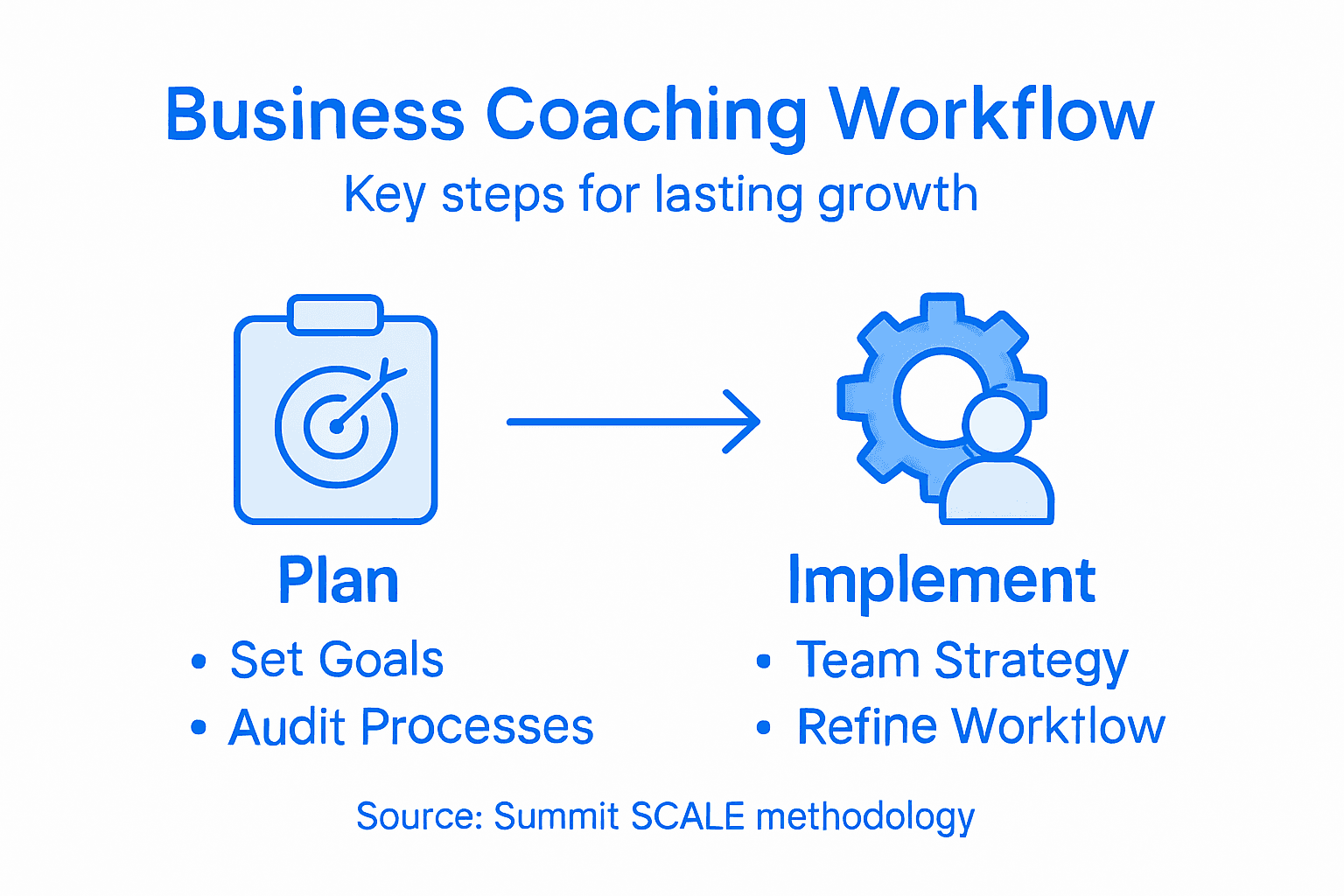
Lean workflow improvement methods offer powerful frameworks for systematically enhancing organisational performance. These approaches focus on continuous incremental improvements that eliminate waste and maximise productivity across all business functions.
Key areas to target for workflow enhancement include:
- Communication channels and information sharing
- Repetitive task automation
- Resource allocation and utilisation
- Technology and digital tool integration
- Cross-departmental collaboration
- Performance tracking and feedback mechanisms
To implement meaningful workflow improvements, follow these strategic steps:
- Map current processes in detailed workflow diagrams
- Identify bottlenecks and inefficiency points
- Prioritise improvements with maximum impact
- Develop targeted intervention strategies
- Create pilot programmes for testing changes
- Measure and analyse improvement outcomes
Successful workflow optimisation requires a commitment to continuous learning and incremental refinement.
Remember that workflow improvement is an ongoing journey. Maintaining flexibility and openness to change will be critical in sustaining long-term operational excellence.
Expert tip: Schedule quarterly workflow audits to ensure your processes remain adaptable and aligned with evolving business objectives.
Step 5: Verify outcomes and refine business coaching workflow
The final stage of your business coaching journey involves a critical process of measuring, evaluating, and continuously improving your strategic approach. Success is not just about implementing strategies, but systematically understanding their real-world impact and making intelligent refinements.
Coaching outcome verification methods provide structured frameworks for assessing the true effectiveness of your business interventions. These rigorous evaluation techniques transform subjective experiences into measurable, actionable insights.
Key components of outcome verification include:
- Performance metric tracking
- Multi-source feedback collection
- Comparative analysis against initial objectives
- Quantitative and qualitative assessment techniques
- Identifying specific improvement areas
- Documenting lessons learned
To effectively verify and refine your coaching workflow, follow these strategic steps:
- Establish clear, measurable success criteria
- Collect comprehensive performance data
- Conduct thorough performance reviews
- Identify gaps between expected and actual outcomes
- Develop targeted improvement strategies
- Implement incremental workflow adjustments
Continuous improvement is not about achieving perfection, but about making consistent, meaningful progress.
Remember that workflow refinement is an ongoing process. Your willingness to objectively assess results and adapt your approach will be the cornerstone of sustained business growth.
Expert tip: Create a standardised quarterly review template to ensure consistent and objective evaluation of your coaching workflow performance.
Here is a summary of how each step in the business coaching workflow contributes to organisational success:
| Step | Purpose | Key Benefit |
|---|---|---|
| Define Goals | Set clear objectives and priorities | Aligns team and resources effectively |
| Assess Processes | Evaluate current workflows and efficiency | Identifies improvement areas and reduces waste |
| Develop Strategies | Design plans for sales and team growth | Drives revenue and builds stronger teams |
| Implement Improvements | Optimise and streamline workflows | Boosts productivity and agility |
| Verify & Refine | Measure results and adapt strategies | Ensures sustained progress and continuous growth |
Unlock Your Business Growth Potential with Expert Coaching
If you are striving to master a business coaching workflow that drives real growth and efficiency you are not alone. Many entrepreneurs struggle with defining clear goals assessing workflows and developing actionable sales strategies that truly scale their business. This article highlights the importance of measurable objectives continuous process optimisation and strategic sales team development—all challenges that we help business owners overcome every day.
At Summit SCALE we specialise in guiding small to medium-sized businesses through these exact hurdles. Our tailored Business Coaching Archives – Summit Scale offer proven strategies to streamline operations enhance sales performance and deliver sustainable growth. We provide hands-on support so you gain not just insights but measurable outcomes that translate into more time money and freedom.
Take control of your business future today by exploring expert coaching solutions designed to transform your vision into reality. Visit Summit SCALE now to schedule your free 15-minute assessment call and begin refining your business coaching workflow for lasting success. For more insights on professional guidance check out our Business Coach Archives – Summit Scale and discover how strategic scaling can elevate your enterprise through Business Scaling Archives – Summit Scale. Act now to start your growth journey with confidence.
Frequently Asked Questions
How do I define business goals for growth success?
To define business goals for growth success, start by conducting a comprehensive business assessment to identify your strengths and limitations. Establish specific, measurable, achievable, relevant, and time-bound (SMART) objectives that align with your company vision, and create realistic timelines for achieving these goals.
What steps should I take to assess my current business processes?
Begin by documenting your existing workflows in detail and measuring performance with quantitative metrics. Identify bottlenecks and redundancies, and gather feedback from team members to understand where improvements can be made.
How can I develop actionable strategies for my sales team?
Conduct a thorough skills assessment of your current sales team to pinpoint performance gaps. Based on this analysis, design targeted training programmes and establish clear performance metrics that align with your overall business objectives.
What methods can I use to implement workflow improvements?
Map out your current processes and identify inefficiencies, prioritising changes that will deliver maximum impact. Develop pilot programmes to test improvements, and continually measure and analyse the outcomes to refine your approaches.
How do I verify outcomes and refine my coaching workflow?
Establish clear, measurable success criteria to evaluate the effectiveness of your strategies. Collect comprehensive performance data and conduct performance reviews to identify gaps between expected and actual outcomes, then create targeted improvement strategies based on your findings.

