
Setting a clear leadership vision often feels overwhelming for business owners trying to balance growth and daily operations. Both American and British organisations rely on well-defined objectives to drive progress, yet success hinges on more than ambition alone. Discover how establishing strong leadership priorities and assessing team dynamics can unlock measurable improvement, with a focus on the concrete steps that build lasting organisational strength.
Table of Contents
- Step 1: Define Leadership Objectives And Growth Priorities
- Step 2: Assess Current Performance And Team Dynamics
- Step 3: Develop Tailored Coaching Strategies And Timelines
- Step 4: Implement Leadership Tools And Monitor Progress
- Step 5: Evaluate Results And Sustain Improvements
Quick Summary
| Key Point | Explanation |
|---|---|
| 1. Define clear leadership objectives | Establish specific, measurable goals that align with your business strategy for effective leadership growth. |
| 2. Assess team performance and dynamics | Use various methods to understand team interactions and capabilities, identifying strengths and areas for improvement. |
| 3. Develop personalised coaching strategies | Create targeted coaching plans tailored to individual leaders’ needs, focusing on their unique growth trajectories. |
| 4. Implement leadership tools for tracking | Use performance monitoring tools to assess leadership development quantitatively and qualitatively, ensuring progress is measurable. |
| 5. Evaluate results for sustainable improvement | Conduct thorough evaluations to validate leadership coaching effectiveness and ensure lasting changes within the organisation. |
Step 1: Define leadership objectives and growth priorities
Successful business leadership begins with crystal-clear objectives and strategic growth priorities. This crucial step transforms vague aspirations into actionable roadmaps that drive meaningful organisational progress.
To define your leadership objectives effectively, you’ll need a systematic approach that considers multiple dimensions of business growth. Start by conducting a comprehensive self-assessment of your current leadership capabilities and organisational landscape. Strategic leadership priorities require a nuanced understanding of your existing strengths and potential development areas.
Key elements to consider when establishing leadership objectives include:
- Personal leadership vision
- Current business performance metrics
- Team capabilities and skills gaps
- Long-term organisational goals
- Market positioning and competitive landscape
Detailed objective setting involves creating measurable and time-bound targets that align with your broader business strategy. This means translating general ambitions into specific, quantifiable milestones that can be tracked and evaluated.
Clear leadership objectives are the compass that guides your business through complexity and change.
When mapping out growth priorities, consider both immediate tactical needs and long-term strategic aspirations. Leadership practices in academic contexts suggest developing a holistic view that encompasses professional development, stakeholder engagement, and continuous learning.
Professional recommendation: Invest time quarterly in reviewing and recalibrating your leadership objectives to ensure they remain relevant and responsive to evolving business dynamics.
Step 2: Assess current performance and team dynamics
Understanding your team’s current performance and interpersonal dynamics is crucial for driving organisational growth and optimising leadership strategies. This step requires a comprehensive and nuanced approach to evaluating how your team functions, communicates, and collaborates.

Team dynamics assessment involves a systematic exploration of interaction patterns, individual capabilities, and collective effectiveness. Start by gathering both qualitative and quantitative data through multiple assessment methods to gain a holistic understanding of your team’s strengths and potential development areas.
Key assessment methods include:
- 360-degree feedback surveys
- Performance metric analysis
- Individual and group interviews
- Psychological profiling tools
- Observation of team interactions
- Collaborative problem-solving exercises
Pay special attention to critical indicators of team health such as communication quality, role clarity, mutual trust, and collective problem-solving capabilities. Effective team assessment goes beyond surface-level performance metrics to understand the underlying dynamics that drive or hinder team productivity.
Team performance is not just about individual skills, but about how those skills harmonise and complement each other.
When evaluating team dynamics, consider both collaborative research insights and your organisation’s unique context. Look for patterns of interaction, potential communication barriers, and opportunities for improving collective performance.
Professional recommendation: Conduct team dynamic assessments regularly, ideally every six months, to maintain a pulse on your team’s evolving capabilities and interpersonal relationships.
The table below contrasts team assessment methods and what unique insights each method can reveal:
| Assessment Method | Insight Provided | Best Used For |
|---|---|---|
| 360-Degree Feedback | Comprehensive perspective on behaviour | Improving interpersonal relationships |
| Performance Metrics | Objective achievement tracking | Measuring goal completion and efficiency |
| Group Interviews | Uncover group challenges & opinions | Diagnosing culture and team cohesion |
| Psychological Profiling | Understanding personality traits | Crafting personal development plans |
Step 3: Develop tailored coaching strategies and timelines
Crafting a precise and personalised coaching strategy is the cornerstone of effective leadership development. This crucial stage transforms generic approaches into targeted interventions that resonate with your unique organisational context and individual leadership potential.
Coaching strategies tailored by developmental stages ensures maximum engagement and sustainable growth. The process requires a nuanced understanding of each leader’s current capabilities, learning style, and potential barriers to development.
Key components of a robust coaching strategy include:
- Individual capability assessment
- Performance gap analysis
- Personalised learning objectives
- Measurable milestone tracking
- Flexible intervention approaches
- Regular progress evaluations
Developing an effective timeline demands careful consideration of organisational readiness and individual learning curves. Strategic coaching timelines should balance comprehensive skill development with realistic expectations and achievable incremental progress.
Successful leadership coaching is a journey of continuous adaptation, not a one-size-fits-all prescription.
Consider leadership coaching implementation approaches that align with your organisation’s unique constraints and development goals. This might involve phased rollouts, targeted training modules, and ongoing behavioural monitoring to ensure sustained leadership growth.
Professional recommendation: Design your coaching strategy with built-in flexibility, allowing for periodic recalibration based on emerging insights and individual progress.
Step 4: Implement leadership tools and monitor progress
Successful leadership development requires strategic implementation of targeted tools and rigorous, ongoing performance monitoring. This stage transforms your coaching strategy from theoretical planning into practical, measurable action that drives genuine organisational transformation.
Leadership development programs must integrate transformational tools that systematically increase leader awareness and practical application. By employing sophisticated assessment frameworks, you can track progression from initial understanding to advanced skill mastery.
Key implementation and monitoring tools include:
- Performance tracking dashboards
- Quarterly skills assessment modules
- 360-degree feedback mechanisms
- Behavioural competency scorecards
- Individual development plan reviews
- Continuous learning documentation
Each leadership tool should be carefully selected to align with your specific organisational objectives and individual developmental needs. Effective monitoring requires consistent, objective evaluation that provides clear insights into growth trajectories and potential intervention points.
Leadership growth is not about perfection, but about intentional and measurable progression.
Careful leadership program monitoring ensures that your development initiatives remain dynamic and responsive. This approach involves setting clear benchmarks, documenting activities, and maintaining transparent communication channels that support ongoing leadership evolution.
Professional recommendation: Implement a quarterly review process that combines quantitative metrics with qualitative feedback to capture the full spectrum of leadership development.
Step 5: Evaluate results and sustain improvements
The final stage of leadership coaching transforms insights and strategies into lasting organisational transformation. This crucial phase moves beyond initial implementation to ensure that leadership development creates meaningful, sustainable change across your entire organisation.
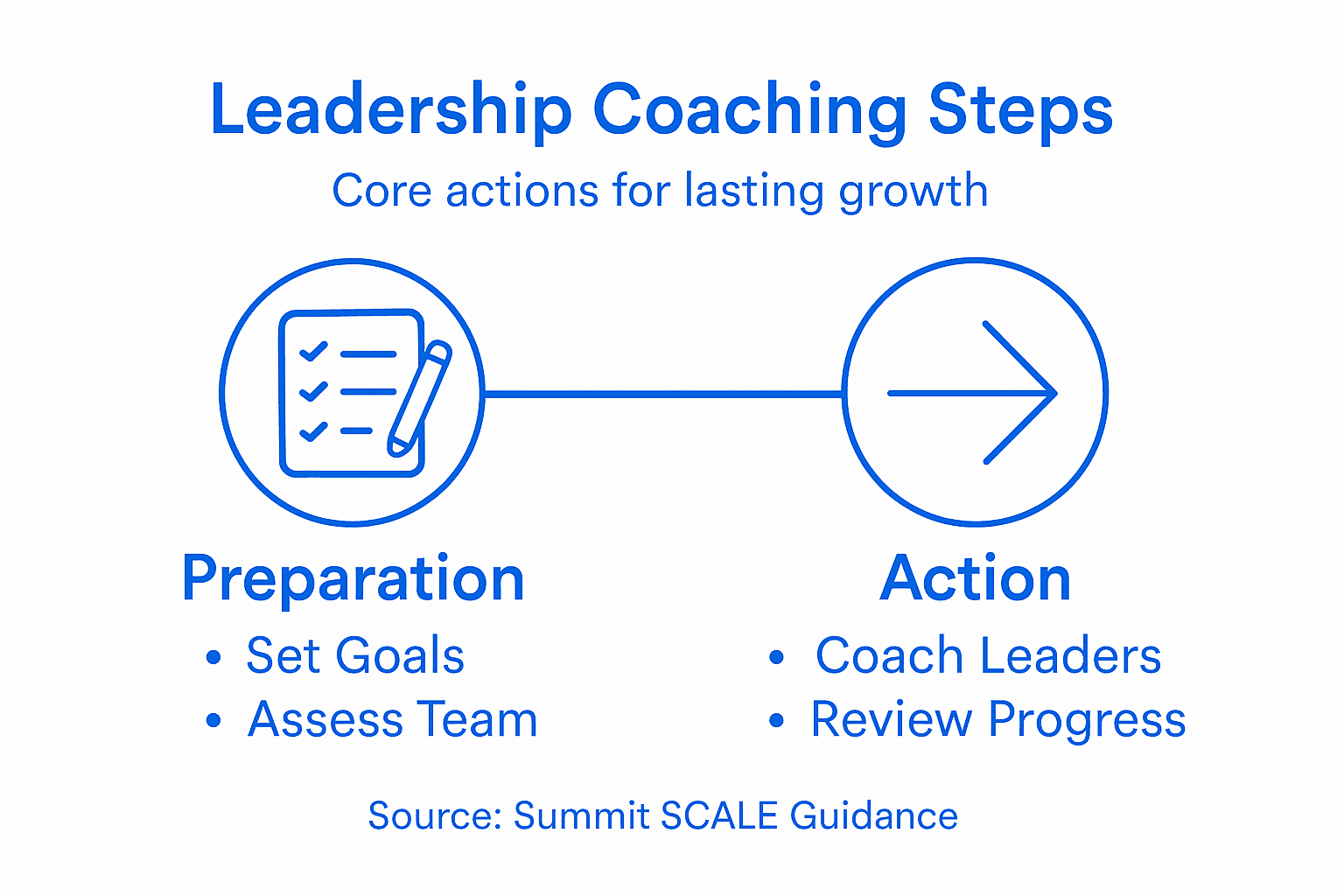
Leadership coaching effectiveness requires comprehensive evaluation through multi-source data collection, comparing pre- and post-coaching performance to validate genuine behavioural improvements and increased self-efficacy.
Key evaluation and sustainability strategies include:
- Comprehensive performance benchmarking
- Longitudinal skill progression tracking
- Cross-functional impact assessment
- Continuous learning integration
- Cultural adaptation metrics
- Leadership behaviour transformation analysis
Strategic evaluation frameworks demand more than superficial metrics. They require deep, nuanced analysis that captures both quantitative performance indicators and qualitative leadership development insights. This approach ensures that coaching interventions create genuine, lasting organisational value.
Sustainable leadership development is about creating systemic change, not just individual improvement.
By implementing strategic coaching evaluation, you can transform coaching from a sporadic intervention into a continuous improvement process that dynamically adapts to organisational needs and individual growth trajectories.
Professional recommendation: Establish a robust feedback loop that transforms evaluation insights into actionable development strategies, ensuring your leadership coaching remains responsive and impactful.
Here’s a summary of leadership coaching steps and their unique organisational benefits:
| Step | Core Focus | Primary Benefit | Long-Term Impact |
|---|---|---|---|
| Define Objectives | Set strategic goals | Increases clarity and alignment | Supports sustained business direction |
| Assess Team | Evaluate performance & dynamics | Identifies skill gaps and strengths | Enhances collaboration and morale |
| Tailored Coaching | Personalise development plans | Enables targeted skill growth | Builds adaptive leadership capability |
| Implement Tools | Apply assessment frameworks | Facilitates measurable progress | Drives continuous improvement |
| Evaluate Results | Benchmark outcomes | Validates transformation success | Ensures systemic, lasting change |
Unlock Lasting Growth Through Expert Leadership Coaching
Mastering leadership coaching requires clear objectives, tailored strategies and ongoing evaluation to foster real transformation. If you have been faced with challenges like unclear leadership goals or team dynamics that stall progress this article highlights critical steps every business owner should know. From defining measurable leadership objectives to implementing effective coaching tools successful leaders create sustainable business growth and enhanced team collaboration.
At Summit SCALE, we understand that your journey towards business freedom and profitability depends on strategic leadership development. Our business coaching services are designed specifically to help small to medium-sized business owners overcome key obstacles such as capability gaps and evolving market demands. With our personalised coaching plans you gain clarity in strategic priorities, insight into team strengths and a flexible timeline to ensure growth is measurable and lasting.
Discover how to transform aspirations into action today by exploring how our coaching approach aligns with leadership growth.
Take the next step to empower your leadership and business. Schedule a free 15-minute assessment call with Summit SCALE now and put yourself on the path to achieving more time, money and personal freedom. Visit our homepage at Summit SCALE to start your journey.
Frequently Asked Questions
What are the key steps in the Master Leadership Coaching Process?
The key steps include defining leadership objectives, assessing current performance, developing tailored coaching strategies, implementing leadership tools, and evaluating results. Follow these steps systematically to ensure a comprehensive coaching approach that drives lasting growth within your organisation.
How can I define effective leadership objectives?
To define effective leadership objectives, conduct a self-assessment of your leadership capabilities, consider team skill gaps, and establish measurable targets. Set clear and time-bound milestones to ensure all objectives align with your broader organisational goals.
What methods can I use to assess team dynamics effectively?
Utilise 360-degree feedback surveys, perform performance metric analysis, and conduct individual and group interviews to assess team dynamics. Implement these methods bi-annually to gain consistent insights into your team’s strengths and areas for improvement.
How do I develop a tailored coaching strategy for leaders?
Begin by assessing individual capabilities and identifying performance gaps, then establish personalised learning objectives. Design a strategy that includes measurable milestones and flexible approaches, allowing for adaptations based on each leader’s progress.
What tools should I implement for monitoring leadership development progress?
Incorporate performance tracking dashboards and 360-degree feedback mechanisms to monitor development progress. Regularly review these tools to ensure they provide relevant insights and foster continuous improvement in leadership skills.
How can I ensure sustainable improvements after leadership coaching?
Conduct comprehensive performance benchmarking and track longitudinal skill development to evaluate coaching effectiveness. Establish a feedback loop that transforms insights into actionable strategies, ensuring leadership improvements are both meaningful and lasting.

