
Growing an American business often means handling unpredictable market shifts and rapid changes in team needs. For many entrepreneurs, scaling successfully requires more than ambition, it demands practical guidance that sharpens leadership skills and builds high-performing teams. Personalised coaching brings a strategic edge by offering targeted interventions and individual transformation in business environments. This article explores how tailored coaching supports sales growth, management effectiveness, and sustained expansion for ambitious American business owners.
Table of Contents
- Defining Coaching In Scaling Business Growth
- Types Of Coaching For Scaling Enterprises
- Key Processes: Strategy, Leadership And Team Building
- Financial, Operational And Performance Impacts
- Common Scaling Pitfalls And How Coaches Help
Key Takeaways
| Point | Details |
|---|---|
| Effective Coaching Accelerates Growth | Business coaching transforms leadership capabilities and enhances organisational adaptability through personalised guidance. |
| Diverse Coaching Types Address Unique Needs | Varied coaching approaches, including Executive and Performance Coaching, target specific business challenges and facilitate growth. |
| Holistic Integration is Crucial for Scaling | Successful scaling involves synchronising strategic planning, leadership development, and team building to create cohesive growth. |
| Coaching Mitigates Scaling Pitfalls | Coaches provide structured interventions to help organisations navigate challenges, develop internal capabilities, and empower effective leadership. |
Defining coaching in scaling business growth
Business coaching represents a strategic partnership designed to accelerate organisational growth through personalised professional guidance. At its core, coaching transforms leadership capabilities by offering targeted interventions that help entrepreneurs navigate complex business challenges.
Research highlights coaching as a critical intervention for scaling businesses, supporting organisational performance through personalised development strategies. This approach goes beyond traditional training methods by focusing on individual leadership potential and organisational adaptability.
Key characteristics of effective business coaching include:
- Personalised performance improvement strategies
- One-on-one leadership development
- Systematic approach to addressing organisational challenges
- Enhancing self-awareness and strategic thinking
- Building resilience in dynamic business environments
Coaching fundamentally operates as a collaborative process where experienced professionals help business owners identify growth opportunities, overcome obstacles, and develop strategic capabilities. Unlike generic consulting, coaching emphasises individual transformation and contextualised solutions tailored to specific organisational needs.
Pro tip: Schedule quarterly coaching assessments to continuously align your leadership development with emerging business challenges and growth objectives.
Types of coaching for scaling enterprises
Business coaching encompasses several distinct approaches designed to support enterprise growth and leadership development. Global coaching practices reveal multiple specialised coaching types that address different organisational needs and strategic objectives.
The primary types of coaching for scaling enterprises include:
- Executive Coaching: Focused on senior leadership performance and strategic decision-making
- Leadership Development Coaching: Targeting emerging leaders and management potential
- Performance Coaching: Concentrating on individual and team productivity
- Business Strategy Coaching: Addressing comprehensive organisational growth and transformation
- Entrepreneurial Coaching: Supporting startup founders and small business scaling
Each coaching type offers unique interventions tailored to specific business challenges. Performance coaching, for instance, helps identify individual and collective barriers to organisational efficiency, while leadership development coaching cultivates strategic thinking and adaptive management skills.
The GROW coaching framework underpins many of these coaching approaches, providing a structured methodology for setting goals, exploring reality, generating options, and establishing clear pathways for organisational development. This systematic approach ensures that coaching interventions are purposeful, measurable, and aligned with enterprise scaling objectives.
Pro tip: Select a coaching approach that precisely matches your current organisational growth stage and specific strategic challenges.
Key processes: Strategy, leadership and team building
Business scaling requires a holistic approach that integrates strategic planning, leadership development, and team building as interconnected processes. Business growth coaching strategies emphasise creating synergy across these critical organisational domains to drive sustainable enterprise expansion.
Key strategic processes for scaling enterprises include:
- Comprehensive business model assessment
- Market positioning and competitive analysis
- Financial performance evaluation
- Strategic resource allocation
- Scalable infrastructure development
Leadership development represents a crucial component of organisational scaling. Effective leaders must cultivate adaptive skills, emotional intelligence, and strategic thinking capabilities that enable teams to navigate complex business challenges. This involves developing communication strategies, decision-making frameworks, and organisational resilience.
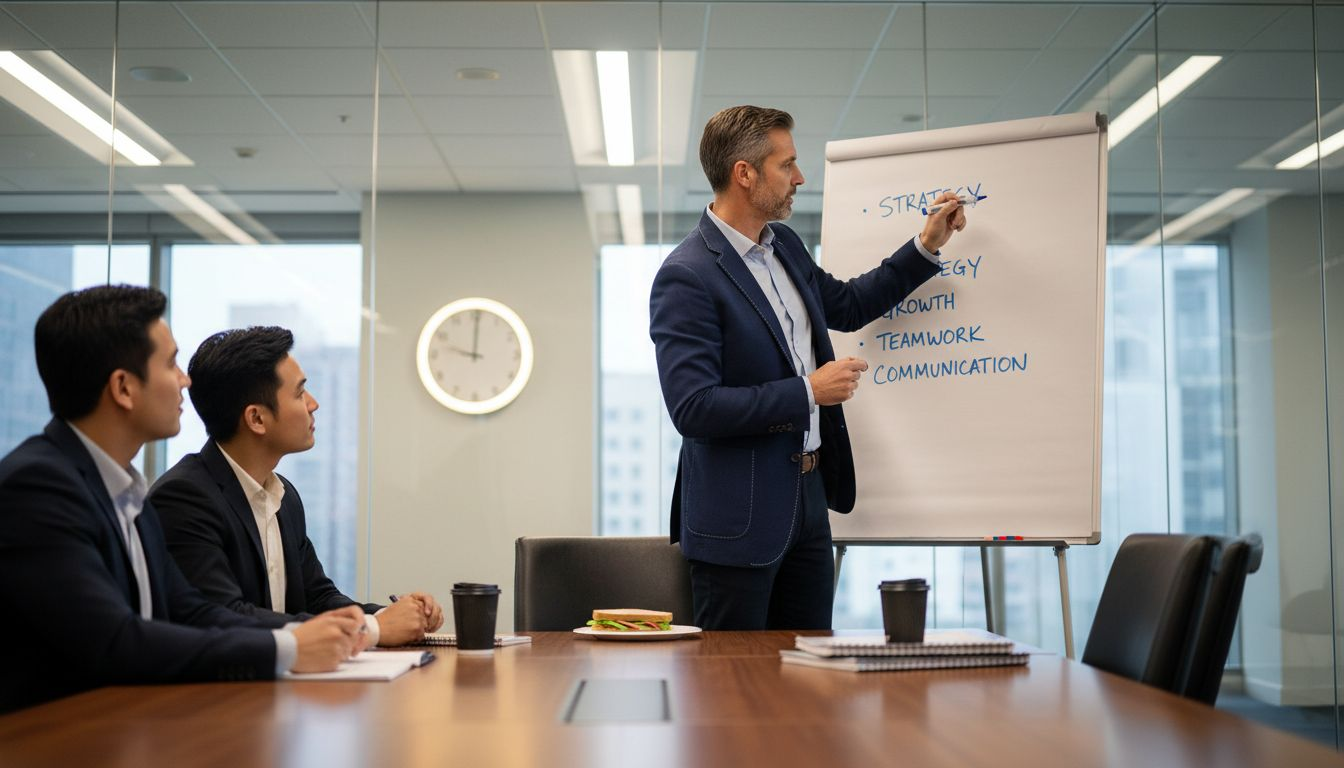
Team building transforms individual potential into collective performance. Coaching strategies for scaling highlight the importance of creating collaborative environments that foster innovation, accountability, and shared organisational goals. Successful team development requires understanding individual strengths, aligning team dynamics, and creating mechanisms for continuous learning and improvement.
Pro tip: Conduct quarterly strategic alignment workshops that simultaneously address leadership development, team dynamics, and organisational strategy to maintain cohesive growth momentum.
Financial, operational and performance impacts
Coaching interventions deliver measurable impacts across financial, operational, and performance dimensions of business scaling. Workplace coaching research demonstrates significant improvements in organisational effectiveness through targeted strategic support.
Key performance impacts include:
- Enhanced leadership decision-making capabilities
- Increased operational efficiency
- Improved employee engagement and productivity
- More robust strategic planning processes
- Better financial management and resource allocation
Financial impacts are particularly noteworthy. Coaching helps businesses identify inefficiencies, streamline cost structures, and develop more sophisticated financial management strategies. By providing targeted insights, coaches enable leaders to make data-driven decisions that directly improve bottom-line performance and create sustainable growth pathways.
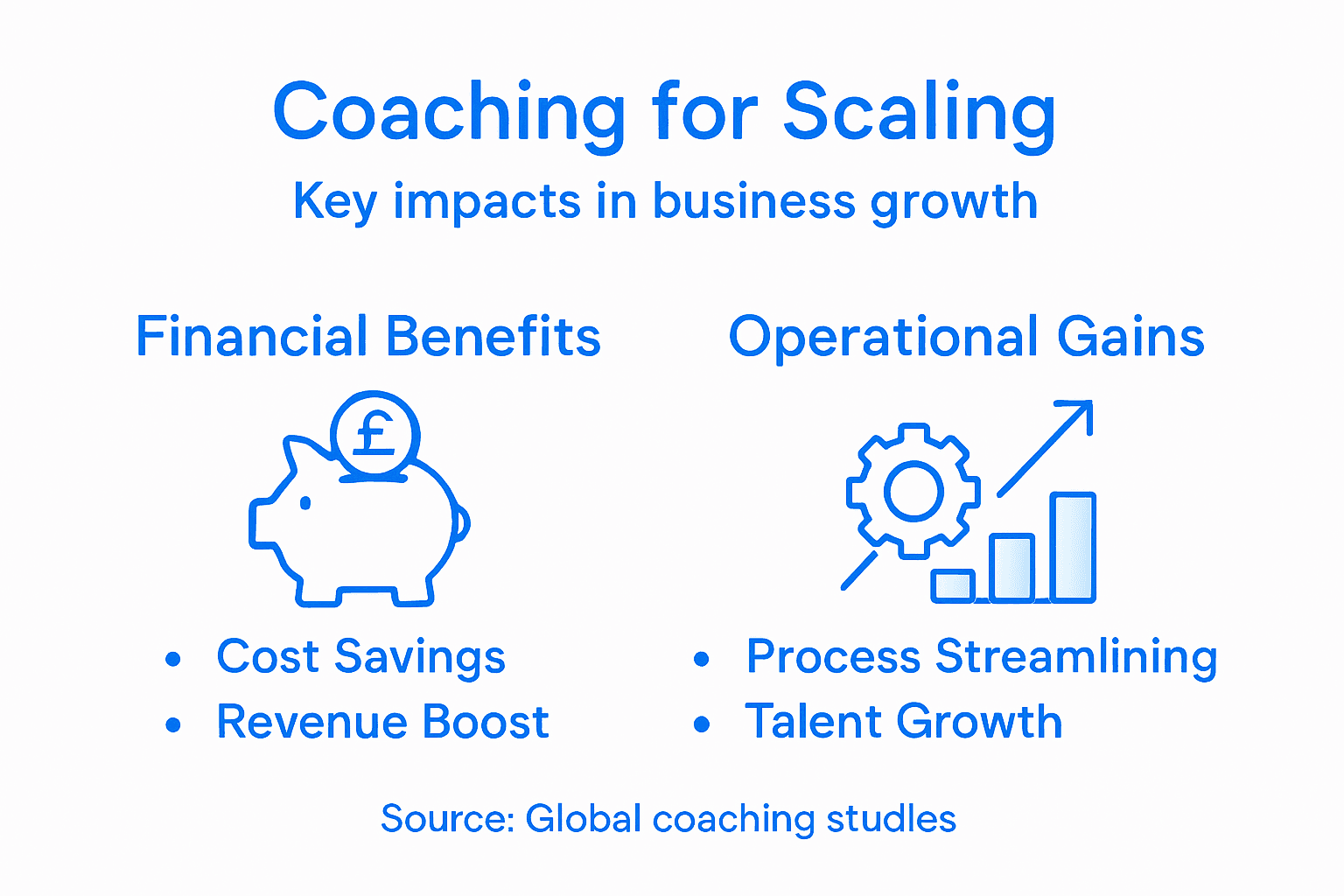
Operational excellence emerges as a critical outcome of effective coaching. Global coaching studies reveal that organisations investing in comprehensive coaching programmes experience significant improvements in operational agility, team performance, and competitive positioning. These improvements translate into tangible business advantages, helping enterprises adapt more quickly to market changes and maintain a strategic edge.
To better understand business coaching’s practical impact, here is a summary of how coaching targets distinct business challenges:
| Challenge Area | Coaching Intervention | Business Outcome |
|---|---|---|
| Leadership | Personalised skill development | Improved executive decision-making |
| Team Dynamics | Collaborative support strategies | Enhanced employee engagement |
| Operations | Systematic efficiency reviews | Increased operational agility |
| Financial Management | Data-driven resource guidance | Optimised cost structures |
Pro tip: Implement quarterly performance coaching reviews to systematically track and quantify the financial and operational improvements driven by coaching interventions.
Common scaling pitfalls and how coaches help
Business scaling involves navigating complex challenges that frequently derail entrepreneurial growth. Coaching strategies address critical obstacles that can impede organisational development and sustainable expansion.
Common scaling pitfalls include:
- Ineffective leadership transition
- Poor strategic resource allocation
- Limited organisational adaptability
- Inconsistent performance management
- Inadequate talent development processes
- Resistance to systematic change
Coaches provide targeted interventions to mitigate these challenges by offering objective perspectives and structured guidance. They help entrepreneurs identify systemic barriers, develop adaptive leadership skills, and create robust frameworks for sustainable growth. Unlike traditional consultants, coaches focus on empowering leaders to develop internal capabilities rather than implementing temporary external solutions.
Psychological and operational barriers frequently emerge during scaling, with many businesses struggling to maintain momentum. Coaches act as strategic partners, helping leaders navigate complex transitions by providing personalised support, challenging limiting beliefs, and developing comprehensive strategies that address both individual and organisational growth requirements.
The following table contrasts common scaling pitfalls with how coaching addresses each obstacle:
| Scaling Pitfall | Coaching Solution | Result |
|---|---|---|
| Ineffective leadership transitions | Leadership mentoring | Smooth succession process |
| Resistance to change | Change management coaching | Increased adaptability |
| Limited talent development | Tailored growth programmes | Stronger workforce capabilities |
| Poor resource allocation | Strategic planning guidance | More effective use of assets |
Pro tip: Conduct a comprehensive organisational diagnostic assessment before scaling to proactively identify and address potential growth impediments.
Unlock Your Business Growth Potential with Expert Coaching
Scaling a business presents complex challenges such as ineffective leadership transitions, limited talent development and poor resource allocation. This article emphasises the crucial role of personalised coaching in overcoming these hurdles and unlocking sustainable growth. If you are seeking practical strategies to enhance leadership, improve team dynamics and streamline operations through tailored performance coaching, you are in the right place.
At Summit SCALE, we specialise in helping small to medium-sized business owners navigate these exact challenges by delivering targeted business coaching. Our approach transforms your leadership capabilities and guides you through strategic growth steps like sales increase, cost management, and team building to create lasting value. Discover how our proven methods align perfectly with the key concepts discussed in this article by exploring our Business Coaching Archives – Summit Scale and Business Scaling Archives – Summit Scale.
Start transforming your business today by scheduling your free 15-minute consultation at Summit SCALE. Don’t let common scaling pitfalls hold you back. Take decisive action now to achieve more time, money and personal freedom through expert coaching designed for your unique growth journey.
Frequently Asked Questions
What is the role of coaching in scaling a business?
Coaching plays a crucial role in scaling a business by providing personalised professional guidance that enhances leadership capabilities, helps identify growth opportunities, and addresses organisational challenges.
What are the different types of coaching available for scaling enterprises?
The main types of coaching for scaling enterprises include executive coaching, leadership development coaching, performance coaching, business strategy coaching, and entrepreneurial coaching, each catering to specific organisational needs.
How can coaching improve team dynamics within an organisation?
Coaching enhances team dynamics by fostering collaborative environments, aligning individual strengths, and promoting continuous learning and improvement, ultimately leading to improved collective performance.
What common challenges can coaching help businesses overcome during scaling?
Coaching helps businesses navigate common scaling challenges such as ineffective leadership transitions, poor resource allocation, limited adaptability, and inadequate talent development by providing targeted interventions and structured guidance.
Recommended
- Role of a Business Coach: Driving Growth and Freedom
- Why Scale a Small Business: Unlocking Profit and Freedom
- Why Invest in Coaching? Unlock Time, Profit, Freedom
- Role of Coaching in Profitability: Unlocking Business Potential
- Website Scalability: Ensuring Growth for NZ Businesses – ResponsiveWebsiteDesign

