
Profit margins feel tighter than ever when running a business in the UK, Australia, or the US. The stress of keeping up with expenses while dreaming of true personal freedom is real. Understanding profitability metrics is the starting point for building a resilient business that doesn’t simply chase revenue. This guide highlights proven strategies and tailored coaching approaches that help owners transform operations for sustainable growth and a more liberated future.
Table of Contents
- Profitability In Business: The Essential Foundation
- Core Drivers Behind Profit Growth
- Types Of Profitability Improvements For Smes
- Business Coaching’s Role In Profit Optimisation
- Financial, Operational, And Personal Rewards
- Common Profitability Pitfalls To Avoid
Key Takeaways
| Point | Details |
|---|---|
| Understanding Profitability | Profitability is essential for long-term sustainability, requiring strategic financial management beyond mere revenue generation. |
| Key Metrics | Focus on profit margin, asset turnover, and funding ratio to gauge financial health and operational efficiency. |
| Holistic Approach | Businesses should adopt a comprehensive strategy that balances cost management, resource allocation, and revenue enhancement initiatives. |
| Continuous Improvement | Regular reviews of financial performance and strategic objectives are crucial for identifying opportunities for growth and optimisation. |
Profitability in Business: The Essential Foundation
Profitability is the vital financial heartbeat that determines a business’s long-term sustainability and growth potential. Understanding its core mechanisms allows entrepreneurs to transform their organisations from merely surviving to consistently thriving.
Profitability represents more than just generating revenue – it encompasses strategic financial management across multiple dimensions. Profitability analysis decomposes business performance into critical components that reveal deeper operational insights:
- Profit margin: Measuring efficiency of converting sales into actual profits
- Asset turnover: Evaluating how effectively resources generate revenue
- Funding ratio: Assessing financial leverage and capital structure
Investors and business leaders scrutinise profitability metrics as fundamental indicators of organisational health. These performance measurements provide a comprehensive snapshot of a company’s ability to:
Here’s a summary of core profitability metrics and their business impact:
| Metric | What It Measures | Impact on Business |
|---|---|---|
| Profit Margin | Efficiency of profit creation | Indicates profitability strength |
| Asset Turnover | Resource utilisation | Highlights operational effectiveness |
| Funding Ratio | Capital structure and leverage | Signals financial stability and risk |
- Generate sustainable earnings
- Control operational expenses
- Reinvest in strategic growth initiatives
- Create value for shareholders
Profitability isn’t just about making money – it’s about creating a resilient, adaptable business model that can weather economic fluctuations.
Successful businesses recognise that profit maximisation involves strategic approaches beyond simple revenue generation. This requires a holistic view that balances sales strategies, cost management, and efficient resource allocation.
Pro tip: Develop a quarterly profitability review process to track key financial metrics and identify potential improvement opportunities proactively.
Core Drivers Behind Profit Growth
Profitability isn’t a mysterious outcome but a strategic result of deliberate business decisions and systematic approaches. Structural and market-related determinants play crucial roles in shaping a company’s financial performance and sustainable growth trajectory.
Businesses can leverage multiple core drivers to enhance profitability:
- External market conditions
- Management effectiveness
- Operational efficiency
- Strategic resource allocation
- Capital structure optimization
The most successful organisations understand that profit growth involves complex internal and external factors. These key drivers include:
- Robust working capital management
- Strategic investment decisions
- Operational cost control
- Market positioning strategies
- Talent development and retention
Sustainable profit growth requires a holistic approach that balances strategic vision with tactical execution.
Companies that excel in profit growth consistently analyse their performance metrics, adapt to market dynamics, and maintain a flexible yet disciplined approach to financial management. This involves continuous learning, strategic pivoting, and maintaining a keen understanding of both micro and macroeconomic factors affecting their industry.

Pro tip: Conduct a quarterly comprehensive review of your business’s profit drivers, identifying potential optimization opportunities across operational, financial, and strategic dimensions.
Types of Profitability Improvements for SMEs
Small and medium-sized enterprises (SMEs) face unique challenges in driving sustainable profitability, requiring strategic and nuanced approaches to financial management. Profitability improvements can be achieved through multiple targeted strategies that address both operational efficiency and financial resource optimization.
Key types of profitability improvements for SMEs include:
-
Cost Control Mechanisms
- Streamlining operational expenses
- Reducing unnecessary overhead
- Implementing efficient procurement strategies
-
Revenue Enhancement Techniques
- Developing targeted marketing approaches
- Exploring new market segments
- Optimizing pricing strategies
-
Operational Efficiency Initiatives
- Automating repetitive business processes
- Improving workflow management
- Investing in technology infrastructure
Financial management practices play a critical role in driving SME profitability. Successful businesses focus on:
- Comprehensive working capital management
- Strategic financial leverage
- Sound decision-making processes
- Continuous performance monitoring
- Adaptive financial planning
Sustainable profitability requires a holistic approach that balances strategic vision with tactical financial management.
Profitability is not a static concept but a dynamic process of continuous improvement. SMEs must remain agile, constantly analysing their financial performance, identifying inefficiencies, and implementing targeted strategies to enhance their competitive position in the market.
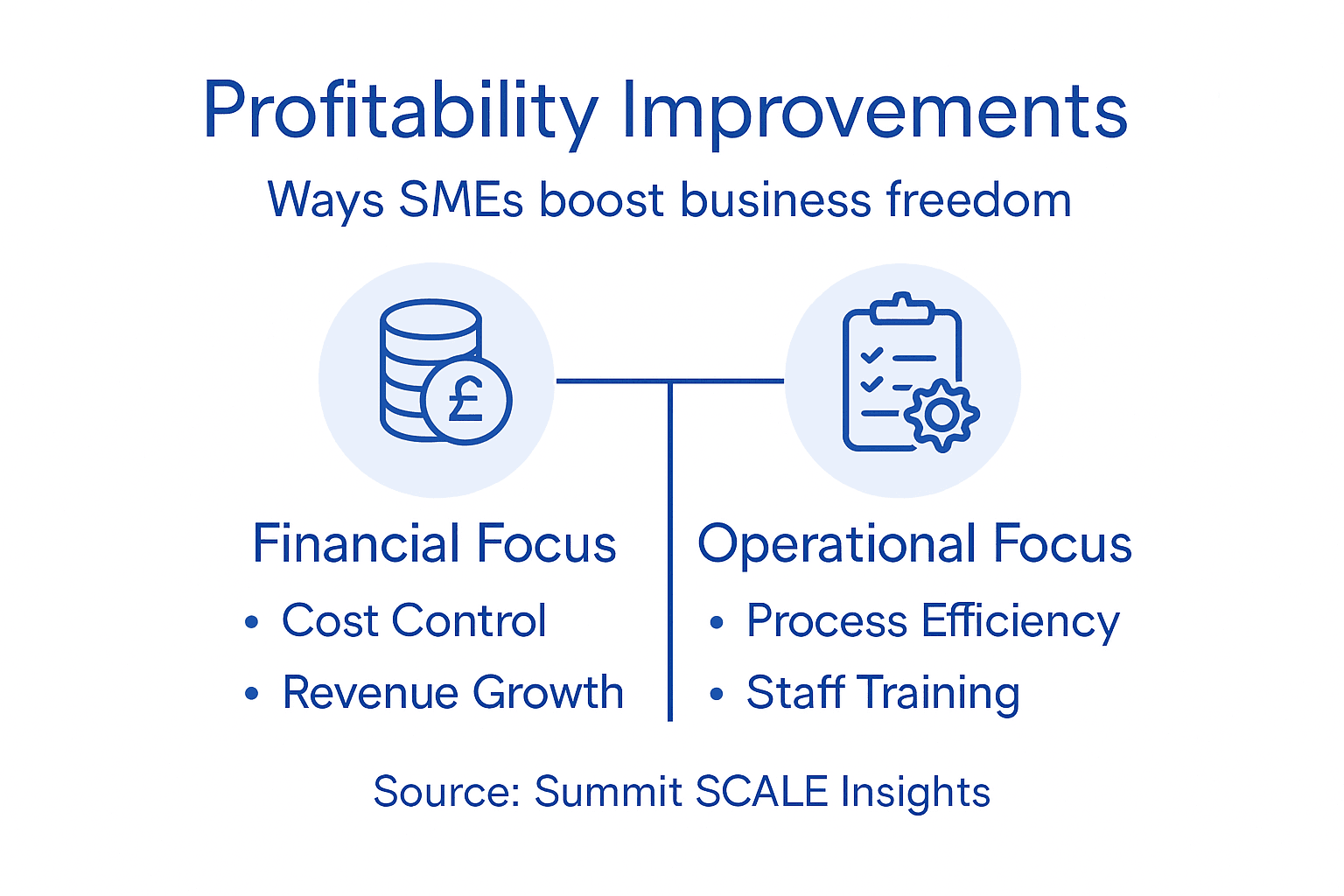
Use this table to compare common SME profitability strategies and their results:
| Approach | Main Focus | Typical Result |
|---|---|---|
| Cost Control | Expense reduction | Increased net margins |
| Revenue Enhancement | Higher sales and market reach | Expanded customer base |
| Operational Efficiency | Workflow and process improvement | Faster service delivery |
| Financial Management | Resource allocation and cash flow | Stable long-term growth |
Pro tip: Develop a quarterly financial dashboard that tracks key profitability metrics, enabling rapid identification and resolution of potential performance bottlenecks.
Business Coaching’s Role in Profit Optimisation
Business coaching has emerged as a transformative approach for organisations seeking to enhance their financial performance and strategic capabilities. Coaching supports profit optimization by providing targeted guidance that helps business leaders develop more sophisticated decision-making and operational strategies.
Key strategic interventions in business coaching include:
-
Performance Analysis
- Identifying operational inefficiencies
- Benchmarking against industry standards
- Developing targeted improvement plans
-
Strategic Decision Support
- Risk management frameworks
- Resource allocation strategies
- Market trend interpretation
-
Leadership Development
- Enhancing management skills
- Building adaptive leadership capabilities
- Cultivating strategic thinking
Effective coaching focuses on improving decision-making processes that directly influence organisational profitability. The most impactful coaching approaches typically address:
- Comprehensive business diagnostics
- Customised strategic planning
- Performance monitoring systems
- Continuous skills development
- Sustainable growth frameworks
Business coaching transforms individual potential into organisational excellence through structured, strategic interventions.
Successful profit optimization through coaching requires a holistic approach that goes beyond traditional consulting. It involves deep engagement, personalised strategies, and a commitment to continuous improvement that empowers business leaders to navigate complex market challenges.
Pro tip: Schedule quarterly coaching sessions that systematically review your business’s strategic objectives, ensuring alignment between your operational activities and long-term profitability goals.
Financial, Operational, and Personal Rewards
Improving business profitability extends far beyond simple financial metrics, encompassing a holistic transformation that impacts multiple dimensions of entrepreneurial success. Profitability contributes to multifaceted business rewards that create sustainable value across financial, operational, and personal domains.
Key rewards of enhanced profitability include:
-
Financial Benefits
- Increased shareholder value
- Enhanced capital for reinvestment
- Improved credit ratings
- Greater financial stability
-
Operational Advantages
- Optimised resource allocation
- Reduced operational inefficiencies
- Enhanced competitive positioning
- More robust business infrastructure
-
Personal Empowerment
- Greater business autonomy
- Reduced personal financial stress
- Increased strategic flexibility
- Enhanced quality of life
Profitability yields comprehensive business and personal transformation through strategic improvements that address multiple performance dimensions:
- Financial sustainability and growth potential
- Operational performance and efficiency
- Leadership confidence and strategic capabilities
- Personal freedom and lifestyle design
- Long-term business resilience
True business success transcends monetary metrics, representing a holistic journey of strategic growth and personal fulfilment.
Successful entrepreneurs understand that profitability is not merely about generating income, but about creating a robust, adaptable business ecosystem that supports both professional objectives and personal aspirations. By focusing on comprehensive performance improvement, business owners can unlock unprecedented levels of freedom and potential.
Pro tip: Develop a quarterly performance dashboard that tracks financial, operational, and personal progress metrics, ensuring a balanced approach to business growth.
Common Profitability Pitfalls to Avoid
Navigating the complex landscape of business profitability requires a keen understanding of potential obstacles that can derail financial success. Common strategic mistakes threaten business sustainability by undermining fundamental performance mechanisms and organisational resilience.
Most critical profitability pitfalls include:
-
Financial Management Errors
- Poor cost control mechanisms
- Ineffective capital allocation
- Inadequate financial forecasting
- Neglecting cash flow monitoring
-
Strategic Planning Weaknesses
- Lack of market responsiveness
- Weak competitive analysis
- Insufficient innovation investment
- Rigid organisational structures
-
Leadership and Operational Challenges
- Ineffective performance management
- Resistance to technological adaptation
- Inconsistent decision-making processes
- Poor talent retention strategies
Systematic approaches prevent profitability decline through strategic interventions:
- Implement robust financial controls
- Develop adaptive strategic planning
- Cultivate a culture of continuous learning
- Establish data-driven performance metrics
- Create flexible organisational frameworks
Avoiding profitability pitfalls requires disciplined management and a proactive approach to business challenges.
Successful businesses recognise that profitability is not a destination but a continuous journey of strategic refinement. By understanding and mitigating potential risks, entrepreneurs can create more resilient, adaptable organisations capable of sustained growth and financial excellence.
Pro tip: Conduct monthly strategic reviews that systematically assess your business’s financial health, identifying potential risks and implementing corrective strategies before they escalate.
Unlock Your Business Freedom by Improving Profitability
Many business owners struggle with controlling costs, managing cash flow, and making strategic decisions that genuinely boost profit margins and long-term growth. The article highlights key challenges such as balancing operational efficiency, resource allocation, and financial stability — pain points that often threaten business sustainability and stall progress toward freedom.
At Summit SCALE, we specialise in turning these complex challenges into clear, actionable steps for small and medium enterprises. Our tailored business coaching focuses on cost control mechanisms, strategic sales growth, and working capital management to help you convert profit optimisation into business freedom. Discover how focused guidance can transform your leadership capabilities and deliver greater personal autonomy.
Explore in-depth insights on Cash Flow Management Archives – Summit Scale and strengthen your financial foundations with Business Finance Archives – Summit Scale. When business performance challenges feel overwhelming, our Business Turnaround Archives – Summit Scale offer proven approaches to regain stability and accelerate profitability.
Take control of your business profitability today and start unlocking the freedom that comes with strategic growth and smart financial management.

Ready to break free from financial uncertainty and unlock your business’s true potential Use Summit SCALE’s expert coaching services to create measurable results. Visit Summit SCALE now and schedule your free 15-minute assessment call to begin your personalised profit optimisation journey.
Frequently Asked Questions
What is profitability and why is it important for a business?
Profitability is the measure of a business’s ability to generate income relative to its expenses over a specific period. It is crucial for long-term sustainability, growth, and creating value for stakeholders.
How can a business improve its profitability?
A business can improve profitability through various strategies such as cost control, enhancing revenue via targeted marketing, improving operational efficiency, optimising pricing strategies, and strategic financial management.
What key metrics should businesses track to assess profitability?
Businesses should track metrics such as profit margin, asset turnover, and funding ratio to gain insights into their financial health and operational efficiency. These metrics help identify areas for improvement.
How does business coaching contribute to profitability?
Business coaching aids profitability by providing targeted guidance on decision-making, performance analysis, and leadership development. It helps businesses refine their strategies and enhance operational capabilities for sustained growth.
Recommended
- Business Freedom: Unlocking Growth For Entrepreneurs
- Business Freedom Explained: Unlocking Owner Autonomy
- Role of Coaching in Profitability: Unlocking Business Potential
- Levers for Profit Growth | Summit SCALE® Coaching
- 7 Smart Ways to Reduce Business Costs for UK Owners – Kefihub
- 7-Step Digital Marketing Checklist for Enterprise Teams – 40Q

