
Running a business in the United States or Australia often means managing growth while feeling stretched for time and resources. For many SME owners, finding ways to build sustainable profits without sacrificing personal freedom feels nearly impossible. Performance coaching in SMEs supports both individual potential and better management practices, strengthening critical systems for growth through communication and teamwork. This article explains how practical, tailored coaching gives you clear strategies and real confidence to run your business more effectively.
Table of Contents
- What Performance Coaching Involves for SMEs
- Key Types of Performance Coaching Available
- Benefits for Leaders and Teams
- Real-World Impact on Growth and Profitability
- Common Pitfalls and How to Avoid Them
Key Takeaways
| Point | Details |
|---|---|
| Performance Coaching Enhances Potential | Structured coaching unlocks individual and organisational capabilities, addressing specific business challenges for SMEs. |
| Types of Coaching Cater to Specific Needs | Options such as performance, developmental, and executive coaching allow tailored approaches based on unique business goals and circumstances. |
| Benefits Extend Beyond Productivity | Coaching fosters psychological safety, team engagement, and strategic clarity, transforming organisational culture and decision-making processes. |
| Measurable Outcomes Drive Success | Businesses that engage in coaching can expect significant improvements in revenue, profit margins, and overall operational efficiency. |
What Performance Coaching Involves for SMEs
Performance coaching for small to medium-sized enterprises goes far beyond motivational speeches or generic business advice. It’s a structured, personalised process designed to unlock both individual potential and organisational capabilities. For SME owners and their teams, this means working with a coach who understands the unique pressures you face—limited resources, tight timelines, and the need to wear multiple hats simultaneously. The coaching process typically involves a combination of one-on-one sessions, team assessments, goal setting, and ongoing accountability mechanisms tailored specifically to your business challenges.
At its core, performance coaching for SMEs focuses on three interconnected areas. First, it enhances individual potential by helping you and your key team members identify strengths, address blind spots, and develop leadership capabilities. This might involve working through communication barriers, building confidence in decision-making, or learning to delegate effectively. Second, coaching improves management and organisational practices by establishing clearer role definitions, better teamwork, and more efficient activity scheduling. Third, and perhaps most critically, it establishes systems for better communication and teamwork, which directly strengthens your performance measurement and management practices—the backbone of sustainable growth.
What typically happens during a performance coaching engagement includes several key components:
- Initial assessment and discovery – The coach conducts detailed conversations with you and potentially your team to understand current business challenges, desired outcomes, and obstacles to growth
- Goal clarification – Together, you define specific, measurable objectives that align with your business strategy and personal vision for success
- Structured coaching sessions – Regular one-on-one meetings (typically fortnightly or monthly) where you work through strategies, practise new approaches, and address emerging challenges
- Accountability frameworks – Your coach helps you establish systems and metrics to track progress, ensuring you remain focused on priorities between sessions
- Team or leadership development – Beyond individual coaching, many engagements include team sessions to build coaching culture and organisational growth, fostering collaboration and innovation across your business
- Practical application – Real business scenarios become learning opportunities, with coaching focused on immediate, actionable improvements you can implement in your daily operations
For Australian and American SME owners specifically, performance coaching often addresses the particular pressures of your market environments. You might be managing rapid growth whilst maintaining company culture, navigating competitive pressures with limited marketing budgets, or building scalable systems as your team expands. A skilled performance coach works within these realities, helping you develop sustainable practices rather than quick fixes that create more problems down the line.
The tangible outcomes you can expect include improved team performance, clearer strategic direction, more effective decision-making, and ultimately, better financial results. However, perhaps more importantly for many business owners, performance coaching creates the clarity and confidence you need to achieve that personal freedom you’re seeking—knowing your business can operate effectively whether you’re in the office or taking time away from the daily grind.
Professional tip Schedule your first coaching conversation focused on identifying your single biggest business bottleneck right now, then use that clarity to guide your entire coaching relationship—this ensures you’re investing in what truly matters to your growth.
Key Types of Performance Coaching Available
Not all coaching approaches are created equal, and understanding the different types available helps you select what actually matches your business needs. The coaching landscape has expanded significantly over recent years, with various types encompassing performance coaching, developmental coaching, and executive coaching. For SME owners, this diversity means you can find coaching tailored to your specific circumstances rather than settling for a one-size-fits-all approach. Each type employs different assessment tools, intervention strategies, and focuses, allowing coaches to address everything from immediate performance gaps to long-term leadership development.
Performance Coaching
Performance coaching addresses immediate business challenges and gaps holding your company back right now. This type focuses on measurable results over a defined period, typically three to six months. If you’re struggling with sales targets not being met, team productivity issues, or operational inefficiencies, performance coaching provides structured accountability to close these gaps quickly. The coach works with you to identify specific performance metrics, establish clear action plans, and review progress regularly. For many Australian and American SME owners facing competitive pressures, performance coaching delivers the tangible improvements needed to strengthen your bottom line.
Developmental Coaching
Developmental coaching takes a longer view. Rather than fixing immediate problems, it builds capabilities for future growth. This approach focuses on helping you and your team develop new skills, expand leadership capacity, and prepare for scaling your business. If you’re planning to expand into new markets, promote key team members into leadership roles, or build more sophisticated systems as you grow, developmental coaching provides the structured support for these transitions. The coaching relationship often spans six months to a year or longer, with the coach serving as a thinking partner as you navigate growth stages.
Executive Coaching
Executive coaching specifically targets business owners and senior leaders. This is where executive coaching transformations support entrepreneur success through deeply personalised work on leadership effectiveness, decision-making, emotional intelligence, and strategic thinking. If you’re feeling isolated in your role, struggling to balance competing priorities, or wanting to develop your leadership presence, executive coaching addresses these higher-level challenges. Many owner-founders benefit from this type because coaches understand the unique pressures of being responsible for every aspect of the business.
Consultative or Goal-Aligned Coaching
Consultative coaching differs because it aligns directly with specific external objectives. If you’re raising investment capital, preparing to sell your business, or working towards measurable growth targets set by stakeholders, consultative coaching ensures your development efforts support those defined goals. This approach often involves personalised relationships that evolve based on coaching function and consultation approach, meaning the coach adapts their style to what your situation demands.
Specialised Coaching Types
Beyond these primary categories, you might encounter:
- Sales coaching – Focused specifically on improving sales performance, closing rates, and revenue generation through skill-building and accountability
- Team or group coaching – Addresses dynamics within your leadership team or specific departments, building collaboration and communication
- Resilience or wellbeing coaching – Helps you and your team manage stress, prevent burnout, and maintain performance during challenging growth phases
- Transition coaching – Supports specific business transitions such as bringing on new leaders, restructuring teams, or pivoting business direction
Choosing the right type depends on your current situation and what you’re trying to achieve. Are you solving immediate performance problems or building capabilities for future growth? Are you working on personal leadership development or addressing team dynamics? The answer determines which coaching type delivers the best return on your investment.
To help differentiate the main coaching types for SMEs, here’s a concise comparison:
| Coaching Type | Typical Duration | Core Focus | Ideal For |
|---|---|---|---|
| Performance Coaching | 3–6 months | Immediate business improvements | Owners fixing urgent issues |
| Developmental Coaching | 6+ months | Leadership and future capabilities | Teams planning for expansion |
| Executive Coaching | Flexible, ongoing | Personal leadership development | Senior leaders and entrepreneurs |
| Consultative Coaching | Project-based | External goal alignment | Owners targeting specific outcomes |
Professional tip Start by clarifying whether your primary need is fixing an immediate problem (performance coaching), building new capabilities (developmental coaching), or strengthening your personal leadership (executive coaching)—this clarity helps you articulate your goals to a potential coach and ensures you’re getting the right expertise for your situation.
Benefits for Leaders and Teams
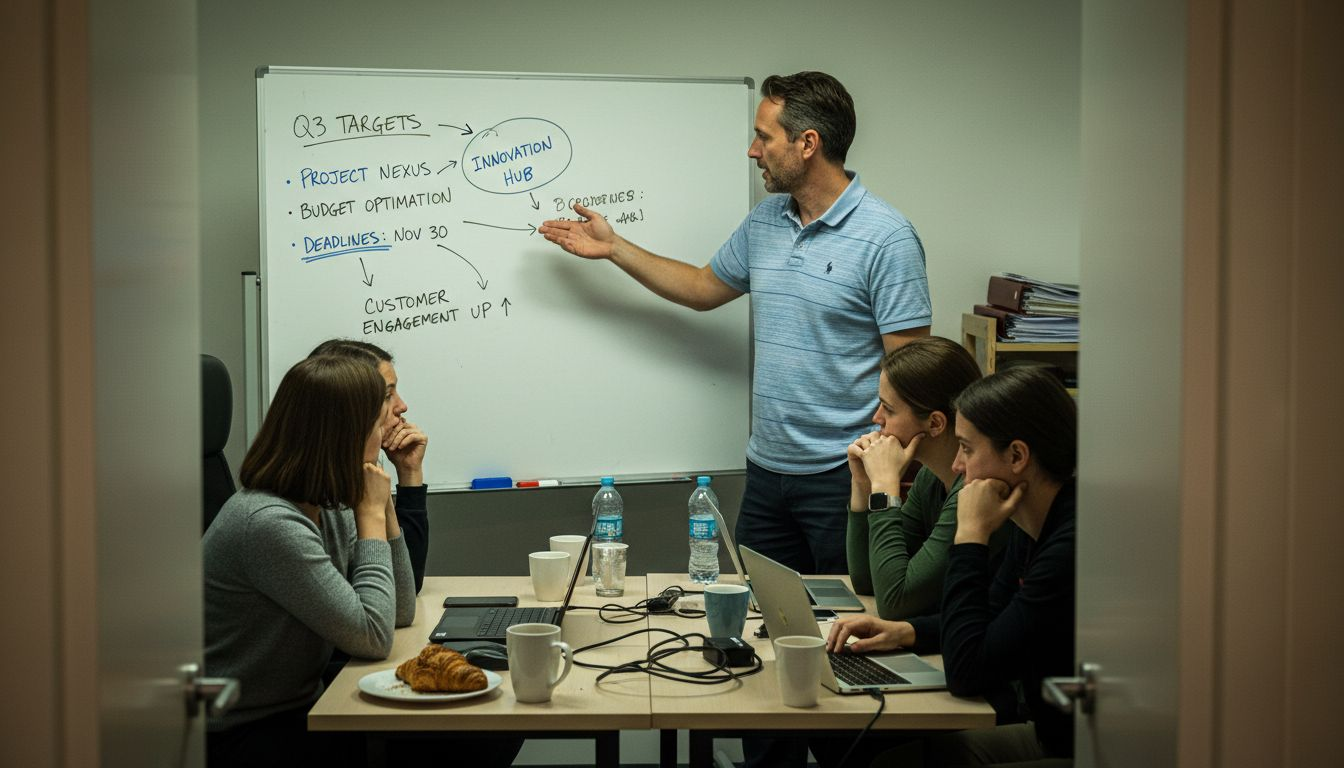
The real value of performance coaching emerges when you see what happens to your people and your business. Beyond the obvious productivity gains, coaching creates a fundamental shift in how leaders think and how teams operate together. When you invest in coaching for yourself and your leadership team, you’re not just addressing today’s problems—you’re building the capability to solve tomorrow’s challenges independently. The benefits ripple through every layer of your organisation, from your boardroom decisions right down to how your frontline teams execute daily.
Benefits for Individual Leaders
As a business owner or senior leader, coaching offers transformative personal benefits. First, you gain clarity on your strategic priorities. Many SME owners operate in reactive mode, responding to urgent issues rather than focusing on what truly matters. A coach helps you cut through the noise and identify the two or three initiatives that will genuinely move your business forward. Second, coaching builds self-awareness and emotional intelligence. Understanding your strengths, blind spots, and triggers makes you a more effective decision-maker and leader. You start noticing patterns in how you respond to stress or conflict, and you can choose different responses.
Third, coaching improves self-efficacy, motivation, and engagement by helping you set precise goals and develop specific capabilities aligned with your vision. Rather than vague aspirations, you have measurable targets and clear action steps. Fourth, coaching provides accountability and momentum. Regular coaching sessions create committed space for progress on your priorities. You show up with updates on what you’ve accomplished, where you’re stuck, and what you need to address next. That structure alone transforms what you actually complete.
Benefits for Your Team
The coaching benefits extend significantly to your entire team. When leaders are developing through coaching, they model growth and learning. Your team sees you taking feedback, trying new approaches, and being honest about what’s not working. That vulnerability gives permission for others to do the same. More directly, when you apply coaching principles—asking better questions, listening more, developing people rather than just directing them—your team responds with increased engagement and motivation.
Coaching creates psychological safety within teams. People feel heard and valued. They’re more willing to speak up about problems, suggest improvements, and take smart risks. This leads to better decision-making because you’re not just hearing from the loudest voices—you’re getting input from everyone. Additionally, managerial coaching fosters innovative work behaviours, enhancing employees’ capacity to generate and implement ideas. Your team becomes more creative, more engaged in problem-solving, and more invested in solutions they’ve helped shape.
Benefits for Organisational Performance
When leaders and teams experience coaching benefits simultaneously, your organisation shifts. You’ll notice improved collaboration across departments because people understand each other better and communicate more effectively. Decision-making accelerates because there’s less politics and more direct conversation. Execution improves because your team understands the why behind decisions and feels ownership of implementation. Retention typically improves as well—people stay longer when they’re developing, feel valued, and see a path forward.
Financially, these benefits compound into measurable results. Better execution means your strategies actually happen. Improved team engagement means fewer mistakes and rework. Faster decision-making means you capitalise on opportunities quicker than competitors. Stronger retention means you’re not constantly investing in recruitment and onboarding new people. The key drivers of high-performance teams include clarity, capability, and connection—all areas that coaching directly strengthens.
The Intangible But Critical Benefits
Perhaps most importantly, coaching creates personal freedom. As your team develops capability and ownership, you spend less time managing problems and more time on strategy and growth. You can take time away from the business knowing it will operate effectively. You feel less alone in your entrepreneurial journey because you have a coach to think through challenges with. You experience greater confidence in your decisions because you’ve processed them thoroughly rather than making reactive calls.
Professional tip Track one specific behaviour change in yourself over the next 30 days of coaching—something like “asking three clarifying questions before giving direction” or “scheduling strategic time weekly”—and notice how your team responds differently to this shift.
Real-World Impact on Growth and Profitability
Numbers tell the story coaching makes in real businesses. This is not theoretical—businesses that invest in coaching experience measurable improvements in revenue, profitability, and sustainability. The impact flows from a simple truth: when your leaders think more clearly, your teams execute better, and your business grows faster. For Australian and American SME owners, the results translate directly into the outcomes you’re chasing: more profit, less stress, and genuine business freedom.
The Growth Numbers
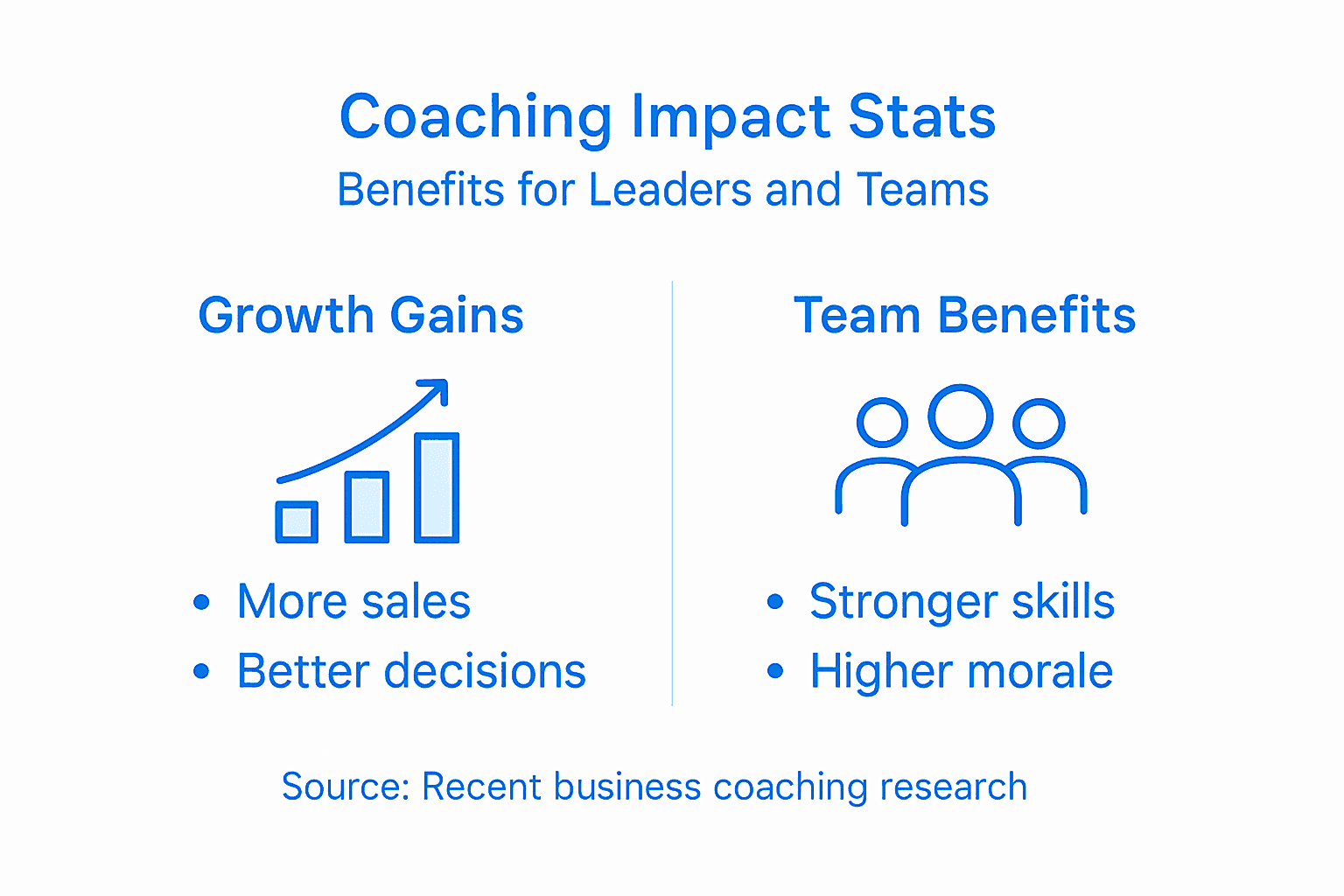
The evidence is compelling. Business coaching demonstrates measurable positive impact on SME growth and profitability by improving motivation, productivity, and innovation across the organisation. Businesses using coaching aren’t just performing marginally better—they’re achieving sustainable competitive advantages that compound over time. One consistent pattern emerges: SMEs with coaching programmes achieve higher growth rates than comparable businesses without coaching support.
Why does this happen? Coaching removes what researchers call “the entrepreneurial ceiling.” Many SME owners can grow their business to a certain point through sheer effort and instinct. But at that threshold, growth stalls because the owner becomes the bottleneck. They’re involved in every decision, every problem-solving session, every client conversation. Coaching breaks through this ceiling by building capability in your leadership team and helping you focus on what only you can do. With that shift, growth accelerates. You’re no longer managing today’s fires. You’re building systems and developing people who can manage those fires independently.
The Profitability Impact
Profitability improvements from coaching typically come from three sources. First, better decision-making reduces costly mistakes. When you’re thinking more strategically and processing decisions thoroughly rather than reacting emotionally, you avoid expensive missteps. Second, improved team engagement drives efficiency. Engaged teams produce higher quality work with fewer errors, reducing rework and waste. Third, coaching directly supports pricing and revenue decisions. Many SME owners underprice their services or struggle to enforce margins. Through coaching, you gain confidence in your value proposition and learn to negotiate better deals with clients and suppliers.
What research shows is that coaching boosts entrepreneurial self-efficacy which contributes to significant firm growth and achievement of profitability milestones. In other words, coaching makes you believe in your capability to scale, and that belief translates into actions that actually generate growth. Fast-growth firms using coaching overcome challenges faster and make decisions that support sustainable scaling rather than chaotic expansion that damages profitability.
Real Outcomes You Can Expect
In practice, coaching clients typically experience several concrete outcomes within the first six to twelve months:
To illustrate how coaching impacts SME growth and profitability, see this summary of typical results:
| Outcome | Typical Range | Business Impact |
|---|---|---|
| Revenue growth | 15–30% increase | More sales and market share |
| Profit margin improvement | 3–8 percentage points | Higher net profits, better efficiency |
| Reduced owner time investment | 10–40% less direct oversight | Greater strategic focus, flexibility |
| Improved team retention | Noticeable staff stability | Lower recruitment costs |
- Revenue growth of 15 to 30 percent through improved sales focus, pricing clarity, and client retention
- Profit margin improvements of 3 to 8 percentage points by eliminating waste, improving efficiency, and making smarter pricing decisions
- Reduced owner time investment with team members taking on responsibilities previously handled by the owner
- Better strategic execution with business plans actually being implemented rather than sitting on shelves
- Improved team retention as people experience better management and clearer development paths
- Faster decision-making with less internal conflict and more alignment across leadership
Understanding the levers for profit growth helps you see how coaching impacts your bottom line. Coaching doesn’t just make you feel better about your business—it creates structural improvements in how you operate.
The Sustainability Factor
What distinguishes coaching-driven growth from other improvement initiatives is sustainability. When you achieve growth through a consultant’s implementation or a new software system, the improvements last only as long as the external support. When you achieve growth through coaching, the improvements stick because they’re embedded in how your people think and work. Your team has learned new capability. You’ve shifted how decisions get made. The culture has changed. That’s why coaching-driven growth compounds over time.
Consider this too: growth without profitability is worthless. Coaching uniquely addresses both simultaneously because it focuses on sustainable practices rather than quick wins that damage margins. You’re not growing for the sake of growing. You’re growing profitably, which is what actually creates the freedom and security you’re seeking.
Professional tip Identify your single biggest profit leak right now (whether it’s pricing, waste, inefficiency, or lost sales) and track that metric specifically throughout your coaching engagement—this gives you a concrete measure of coaching’s impact on your bottom line.
Common Pitfalls and How to Avoid Them
Performance coaching is powerful, but like any investment, it can underdeliver if you approach it poorly. The difference between coaching that transforms your business and coaching that wastes time and money often comes down to avoiding predictable mistakes. Most pitfalls emerge before coaching even begins or develop during the engagement itself. Understanding what typically goes wrong helps you protect your investment and maximise the results you actually achieve.
Pitfall 1: Insufficient Trust and Poor Coach Selection
The coaching relationship lives or dies on trust. If you don’t genuinely trust your coach or feel they don’t understand your business, the entire engagement becomes surface-level. You’ll hold back on discussing real challenges. You won’t implement suggestions that feel risky. You’ll approach sessions as a box-ticking exercise rather than as genuine thinking partnership. This is why insufficient trust development between coach and entrepreneur represents one of the most common reasons coaching fails to deliver results.
How to avoid this: Take time selecting your coach. Have an initial conversation focused on assessing whether their approach resonates with you. Do they understand SME dynamics? Have they worked with businesses in your industry or facing similar challenges? Ask for references from other business owners they’ve coached. Trust your instincts. If something feels off in initial conversations, it will only feel worse after you’ve committed financially. Look for coaches with credentials and formal training rather than anyone calling themselves a coach. Beyond technical competence, you need someone you actually like working with and someone who respects your perspective.
Pitfall 2: Misalignment Between Coaching Style and Your Needs
Coaches differ significantly in their approach. Some are directive and solution-focused. Others are purely reflective, asking questions and letting you arrive at answers. Some specialise in strategy, others in team dynamics, others in personal leadership. Choosing a coach whose style doesn’t match your needs and preferences is like hiring a financial advisor who specialises in cryptocurrency when you need tax planning. You end up with expertise that’s not relevant to your actual situation.
How to avoid this: Clarify what you’re actually trying to achieve before selecting a coach. Are you solving immediate business problems or developing long-term leadership capability? Do you prefer someone who directs you toward solutions or someone who helps you think through options? Are you seeking business strategy coaching or personal development coaching? Once you’re clear, find coaches specialising in that specific area. Many coaches are generalists, but the best results typically come from specialists. During initial conversations, ask about their coaching process, their typical client profile, and how they’d approach your specific challenges. If their style doesn’t feel like a fit, keep looking.
Pitfall 3: Lack of Coachability and Readiness
Some business owners aren’t ready for coaching. Maybe they’re defensive about feedback. Maybe they’re so busy fighting fires they can’t commit time to reflection and implementation. Maybe they’ve already decided what they need to do and they’re seeking a coach to rubber-stamp their plans rather than to genuinely challenge their thinking. Lack of coachability meaning the entrepreneur’s readiness to engage authentically, fundamentally limits coaching effectiveness.
How to avoid this: Before committing to coaching, honestly assess your readiness. Are you genuinely open to feedback that challenges your current thinking? Can you commit 4 to 8 hours monthly to coaching sessions and implementation? Are you willing to try new approaches even if they feel uncomfortable initially? If you answered no to any of these, you might not be ready yet. That’s okay. Come back when circumstances change. Starting coaching when you’re not ready wastes money and creates frustration for both you and the coach.
Pitfall 4: Inconsistent Measurement and Tracking
Many coaching engagements lack clear metrics for success. You start coaching feeling positive, but without specific measures, it’s hard to know whether you’re actually making progress. Then, when results feel ambiguous, you lose confidence in the process. Additionally, inconsistent measurement of outcomes and varying coaching quality mean you can’t identify what’s working and what needs adjustment.
How to avoid this: Establish specific, measurable goals at the beginning of coaching. What will success look like? How will you know you’re making progress? These might be financial targets (revenue growth, profit margin, cash flow improvements), operational metrics (team productivity, customer retention), or personal measures (time working in the business, decision-making confidence). Track these regularly and review them with your coach. This creates accountability and helps you both adapt the coaching approach if progress stalls.
Pitfall 5: Resistance to Change and Implementation Failure
Coaching creates insights and plans, but none of that matters if you don’t implement. Some business owners get caught up in the thinking and planning phase but struggle to actually change their behaviour or execute new strategies. Resistance to change is natural—old patterns are comfortable—but coaching only works when you move from insight to action.
How to avoid this: Expect discomfort. Real change feels awkward initially. You’re breaking habits and trying new approaches. That’s intentional. A good coach will acknowledge this resistance and help you work through it rather than colluding with avoidance. Commit to small, specific actions between sessions. Report back on what you’ve done and what you’ve learned. Make implementation a non-negotiable part of the coaching process. You’re not paying for conversation. You’re paying for transformation, and transformation requires action.
Pitfall 6: Poor Strategic Foundation
Sometimes coaching fails because it’s trying to improve execution of poor strategy. You’re becoming more efficient at doing the wrong things. Before investing in performance coaching, ensure your underlying business strategy is sound. Coaching can then help you execute that strategy effectively.
How to avoid this: Have clarity about your business direction and strategy before starting performance coaching. If you’re uncertain about where you’re heading or how you’ll compete, consider strategy work first. Once strategy is clear, coaching focuses on personal and team development to execute that strategy. This combination is far more powerful than coaching alone.
Professional tip In your first coaching session, explicitly discuss how you’ll measure progress and what commitment you’re making to implementation, then put this agreement in writing so you both have clarity on expectations throughout the engagement.
Unlock Your Business Potential with Tailored Performance Coaching
If you are an SME owner feeling overwhelmed by daily fires or struggling to break through growth ceilings, the personalised performance coaching outlined in this article is the missing piece your business needs. Many business leaders face challenges such as unclear strategic priorities, limited team engagement, and profit margin pressures. At Summit SCALE, we specialise in addressing these exact pain points by helping entrepreneurs develop clarity, accountability, and leadership skills that directly translate into sustainable growth and increased profitability.
Take the vital step today to transform how your business performs by exploring our expert business coaching services. Our structured, results-driven approach is designed specifically for small to medium-sized enterprises seeking more time, more money, and greater freedom. Don’t wait for stress and inefficiency to take their toll. Visit Summit SCALE now to schedule your free 15-minute assessment call and start your journey towards confident decision-making and accelerated business growth.
Frequently Asked Questions
What is performance coaching for business growth?
Performance coaching is a structured, personalised process aimed at enhancing individual and organisational performance. It helps business owners and their teams identify strengths, address weaknesses, and develop leadership capabilities to drive growth.
How does performance coaching improve team performance?
Performance coaching enhances team performance by establishing clearer roles, improving communication, fostering collaboration, and providing accountability. This leads to better decision-making, increased engagement, and a more effective execution of strategies.
What outcomes can businesses expect from investing in performance coaching?
Businesses can expect tangible outcomes, including improved revenue, enhanced decision-making, better team dynamics, increased productivity, and greater retention of staff, all leading to sustainable growth and profitability.
How do I choose the right type of performance coaching for my business?
Selecting the right type of performance coaching depends on your needs. If you need immediate results, performance coaching is ideal. If you’re focused on long-term growth and leadership development, consider developmental coaching. Assess your specific challenges and goals to find the best fit.

