
Growth sounds simple until you face the reality: 78% of small business owners plan to expand despite average profit margins hovering around just 7 to 10%. The gap between ambition and execution reveals a critical truth. Prioritising sales growth isn’t about chasing revenue at any cost. It’s about building predictable pipelines, sustainable profit, and genuine business freedom. This guide explains why sales growth deserves your primary focus and how to pursue it without sacrificing profitability or burning through cash reserves.
Table of Contents
- Understanding The Importance Of Prioritising Sales Growth In Smbs
- Effective Sales Growth Strategies For Sustainable Business Expansion
- Balancing Sales Growth With Profitability To Ensure Sustainable Success
- Leveraging Coaching And Growth Frameworks To Accelerate Profitable Sales Expansion
- Unlock Your Business Potential With Expert Coaching
- Why Prioritise Sales Growth? Frequently Asked Questions
Key takeaways
| Point | Details |
|---|---|
| Profit margins remain tight | Small businesses typically operate with 7 to 10% profit margins, making strategic growth essential for sustainability |
| Reinvestment fuels predictable revenue | Healthy SMBs reinvest 30 to 50% of net profit into sales and marketing systems to build consistent pipelines |
| Structured methods drive efficiency | Sales playbooks, CRM automation, and multi-channel outreach create scalable, repeatable growth processes |
| Balance prevents cash flow crises | Growing revenue without profitability discipline causes 82% of small business failures due to cash flow problems |
| Coaching accelerates sustainable scaling | Expert guidance helps implement growth strategies while maintaining profit focus and business freedom |
Understanding the importance of prioritising sales growth in SMBs
The numbers tell a compelling story about why sales growth matters. Small businesses average profit margins of 7 to 10%, leaving little room for error or complacency. Yet despite these tight margins, 78% of SMB owners still plan for growth, recognising that standing still means falling behind. The key lies in how you pursue that growth.
Sales growth creates the foundation for everything else in your business. Without expanding revenue, you’re constantly choosing between investing in your team, improving operations, or taking home a decent salary. Healthy growing SMBs reinvest 30 to 50% of net profit into sales and marketing systems, building predictable pipelines rather than hoping for the next big deal. This disciplined approach separates businesses that scale sustainably from those that plateau or collapse under their own weight.
Prioritising sales growth delivers tangible benefits that compound over time. You improve cash flow by shortening sales cycles and increasing conversion rates. You expand market share by reaching more qualified prospects through systematic outreach. You fund innovation by generating surplus revenue for product development or service enhancement. Most importantly, you align profitability with growth by ensuring every new customer contributes meaningfully to your bottom line.
Consider these core advantages of making sales growth your primary focus:
- Enhanced cash flow stability through predictable revenue streams
- Increased market presence and competitive positioning
- Greater capacity to invest in team development and operational improvements
- Reduced dependence on any single client or revenue source
- Improved business valuation for future exit or investment opportunities
The businesses that thrive don’t just grow. They grow with intention, building sales systems that generate consistent results rather than relying on heroic individual efforts or lucky breaks.
Effective sales growth strategies for sustainable business expansion
Growing sales systematically requires more than hustle and hope. You need proven methodologies that create repeatable success. A sales playbook serves as your blueprint, documenting what works in your specific market with your ideal customers. It captures successful talk tracks, objection handling techniques, and proven closing strategies so your entire team can replicate top performer results.
CRM tools and automation enable prioritisation based on lead intent and engagement signals. Instead of treating every prospect equally, you focus energy on those showing genuine buying signals. Modern systems track email opens, website visits, and content downloads, helping you time outreach when prospects are most receptive. This efficiency matters enormously when you’re competing against larger firms with bigger sales teams.

Multi-channel outreach combining phone, email, and LinkedIn increases contact rates dramatically compared to single-channel approaches. Prospects ignore cold emails but answer LinkedIn messages, or vice versa. By touching multiple channels systematically, you break through the noise without becoming annoying. The key lies in coordinating messages across platforms so each touchpoint reinforces the others rather than feeling random or disconnected.
Clear sales goals and repeatable processes create accountability throughout your organisation. Everyone knows what success looks like and how their daily activities contribute to hitting targets. Weekly pipeline reviews identify bottlenecks before they become crises. Monthly performance analysis reveals which strategies deliver results and which waste resources.
Follow this implementation plan to build your sales growth engine:
- Document your current sales process from first contact to closed deal, identifying gaps and inconsistencies
- Create a basic sales playbook capturing your best approaches, questions, and responses to common objections
- Implement a CRM system and train your team to use it consistently for tracking every prospect interaction
- Establish lead scoring criteria based on firmographic data and behavioural signals to prioritise outreach
- Design multi-channel sequences that touch prospects through phone, email, and social platforms systematically
- Set weekly activity metrics and monthly revenue targets with regular review cadences
- Analyse results quarterly and update your playbook based on what’s working in the current market
Pro Tip: Review your sales playbook every 90 days using real performance data, not assumptions. Markets shift, buyer preferences evolve, and yesterday’s winning approach becomes tomorrow’s tired pitch. Regular updates keep your team sharp and your messaging relevant.
These practical sales growth tips become even more powerful when combined with disciplined execution and continuous improvement. The businesses that scale sustainably treat sales as a system, not a series of random activities.
Balancing sales growth with profitability to ensure sustainable success
Pursuing revenue growth without maintaining healthy margins creates a dangerous illusion of success. You might celebrate hitting new revenue milestones whilst your bank account dwindles and stress levels soar. The data reveals why this balance matters so critically.
| Metric | Benchmark | Implication |
|---|---|---|
| Average SMB profit margin | 7 to 10% | Limited buffer for mistakes or market shifts |
| Recommended growth reinvestment | 30 to 50% of net profit | Sustainable expansion without overextending |
| Cash flow related failures | 82% of SMB closures | Profitability discipline prevents catastrophic outcomes |
These numbers illustrate a fundamental truth: 82% of small business failures stem from cash flow issues, often caused by growing too fast without adequate profit margins. You land a major contract, hire staff to deliver it, purchase inventory or equipment, then discover the client pays slowly whilst your expenses hit immediately. The resulting cash crunch forces difficult choices like delaying supplier payments, missing payroll, or taking expensive short-term financing.
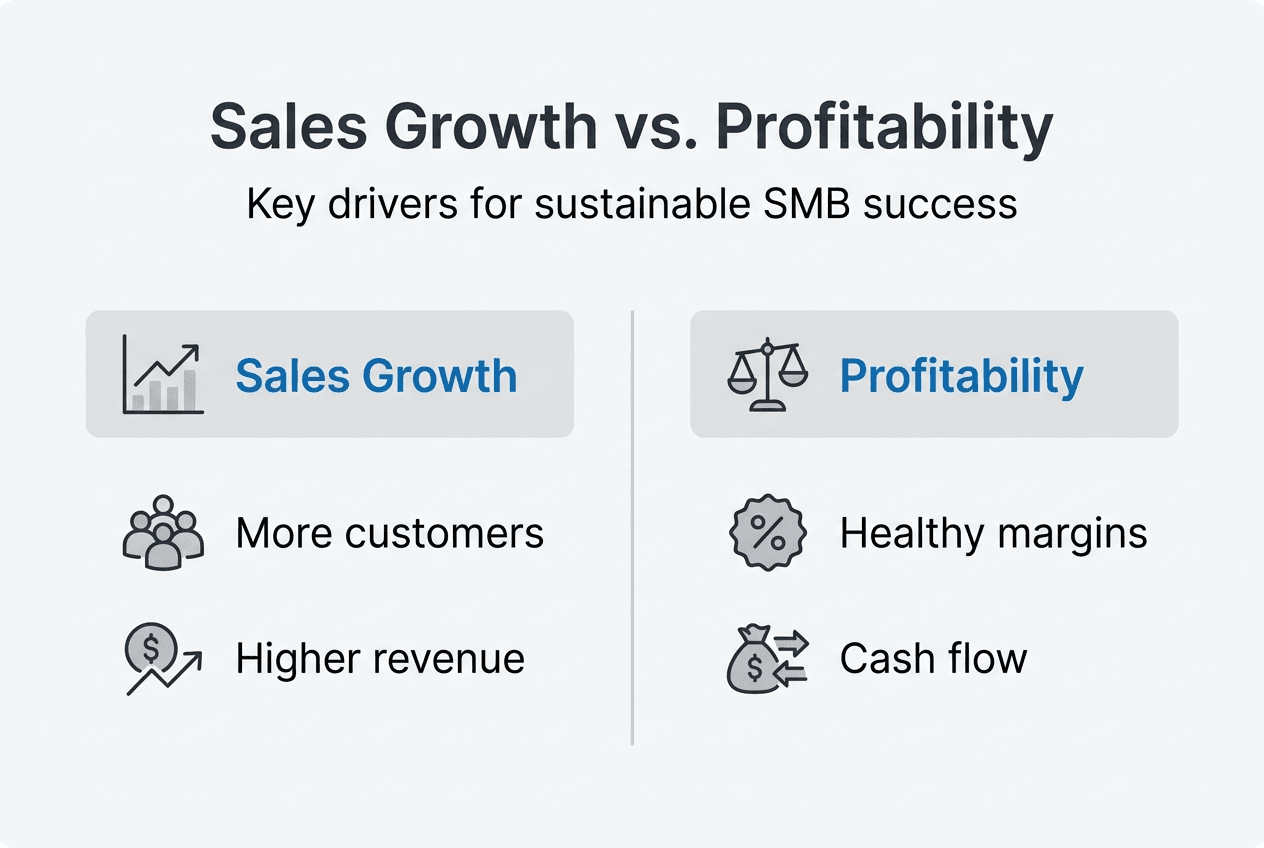
Healthy growing SMBs reinvest 30 to 50% of net profit into expansion activities, keeping the remainder as buffer and owner compensation. This disciplined approach ensures you’re funding growth from genuine profit, not borrowing against hoped-for future revenue. It forces tough decisions about which opportunities truly deserve investment versus which merely look attractive on the surface.
Consider this expert perspective on sustainable growth:
Growth at all costs destroys more businesses than it builds. Profitability funds sustainable expansion, prevents cash flow crises that sink 82% of failed SMBs, and provides the runway needed to weather inevitable market disruptions. Prioritise profitable growth over vanity metrics like revenue alone.
The importance of business profitability extends beyond survival. Profit creates options. You can invest in better talent, superior tools, or strategic opportunities when they arise. You sleep better knowing payroll is covered regardless of whether this month’s big deal closes on time. You build a business worth owning, not just a demanding job that happens to have your name on the door.
Pro Tip: Track your cash conversion cycle monthly alongside sales targets. Monitor how long it takes to turn a sale into actual cash in your bank account. This metric reveals problems early, giving you time to adjust payment terms, tighten collections, or slow growth before cash flow becomes critical.
Balancing growth with profitability isn’t about choosing one over the other. It’s about pursuing both simultaneously with clear-eyed discipline and realistic expectations.
Leveraging coaching and growth frameworks to accelerate profitable sales expansion
Implementing sales growth strategies whilst maintaining profitability requires expertise many business owners haven’t yet developed. Business coaching provides accountability, strategic guidance, and proven frameworks that compress your learning curve dramatically. Instead of making expensive mistakes through trial and error, you benefit from someone who’s guided dozens of businesses through similar challenges.
The data supports coaching’s impact on growth. 62% of SMBs growing over 5% annually cite increasing sales revenue as their top challenge, whilst 45 to 49% leverage AI tools to boost revenue and productivity. Combining human expertise through coaching with technology advantages creates a powerful multiplier effect. Your coach helps you identify which tools matter for your specific situation, how to implement them effectively, and how to measure results that actually drive business value.
Structured methodologies including sales playbooks, CRM automation, and intent-based prioritisation become far more effective when implemented with expert guidance. A coach helps you avoid common pitfalls like over-complicating your playbook, choosing the wrong CRM for your needs, or prioritising the wrong lead signals. They bring pattern recognition from working with multiple businesses, spotting issues you might miss until they become serious problems.
Coaching delivers specific benefits that accelerate your progress:
- Strategic clarity on which growth opportunities deserve investment versus which distract from core objectives
- Focused execution by helping you say no to good ideas that aren’t great fits for your current stage
- Enhanced sales skills through role-playing, feedback, and exposure to approaches you haven’t considered
- Sustained motivation during the inevitable challenges and setbacks every growing business faces
- Better decision-making by providing an experienced sounding board before you commit significant resources
The most effective approach combines coaching with proven growth strategies for SMBs tailored to your industry, market position, and resources. Your coach helps you adapt general principles to your specific situation, avoiding cookie-cutter solutions that sound good but don’t fit your reality. They push you to implement rather than endlessly planning, whilst also preventing reckless moves that could damage your business.
Technology amplifies coaching’s impact when used strategically. AI tools handle repetitive tasks like initial lead research or email personalisation at scale. CRM systems surface insights about pipeline health and sales team performance. Analytics platforms reveal which marketing channels deliver qualified leads versus which waste budget. Your coach helps you interpret these signals and adjust strategy accordingly, turning data into actionable intelligence.
Investing in business coaching pays dividends that compound over time. You build capabilities that serve your business for years, not just quick fixes that address immediate symptoms. You develop leadership skills that help you build and manage a sales team as you scale. Most importantly, you create the business freedom you started your company to achieve in the first place.
Unlock your business potential with expert coaching
Prioritising sales growth whilst maintaining healthy profitability requires both strategic vision and tactical execution. You’ve seen the frameworks, methodologies, and benchmarks that separate businesses scaling sustainably from those struggling despite growth.
Expert coaching transforms these concepts into reality for your specific business. Investing in coaching provides the accountability, expertise, and strategic guidance needed to implement growth strategies without sacrificing profit or burning out. Discover how coaching for SMEs helps you build predictable sales systems, develop your team’s capabilities, and create the business freedom you deserve. The path to sustainable success starts with expert guidance tailored to your unique situation and goals.
Why prioritise sales growth? Frequently asked questions
What is the ideal profit margin to maintain whilst growing sales?
Small businesses should target 7 to 10% net profit margins as a baseline, though service businesses often achieve 15 to 20% whilst product businesses may run tighter. The key is maintaining positive margins whilst scaling, not sacrificing profitability for revenue growth.
How much profit should SMBs reinvest into sales and marketing?
Healthy growing businesses reinvest 30 to 50% of net profit into sales and marketing systems, keeping the remainder for owner compensation and cash reserves. This disciplined approach funds expansion without overextending your resources or creating cash flow problems.
How can sales playbooks improve growth results?
Sales playbooks document proven approaches, successful talk tracks, and effective objection handling so your entire team replicates top performer results. They reduce ramp time for new hires, maintain consistency across your sales force, and provide a foundation for continuous improvement based on real performance data.
Why is balancing cash flow important during rapid growth?
Eighty-two per cent of small business failures stem from cash flow issues, often caused by growing too fast without adequate working capital. Revenue growth creates expenses immediately whilst payment typically lags, creating a dangerous gap that can sink otherwise successful businesses.
How does coaching help accelerate sales growth sustainably?
Coaching provides strategic guidance, proven frameworks, and accountability that compress your learning curve whilst avoiding expensive mistakes. Coaches help you implement structured sales methodologies, maintain profit discipline during expansion, and develop leadership capabilities needed to scale beyond your personal capacity.

