
Running a business brings constant pressure to lead teams effectively and sustain growth in an unpredictable market. Many American business owners discover that traditional management tactics no longer keep pace with the demands of modern organisations, where adaptability and emotional intelligence matter more than ever. Leadership coaching offers a highly personalised approach, focusing on the unique needs of both the owner and their business to unlock stronger team performance and durable success. Personalised leadership development can help transform daily challenges into long-term opportunities.
Table of Contents
- Defining Leadership Coaching for Owners
- Types of Coaching and Customised Approaches
- Core Processes and Skills Developed
- Key Benefits for Business Owners
- Risks, Misconceptions, and Limitations
- Selecting the Right Leadership Coach
Key Takeaways
| Point | Details |
|---|---|
| Leadership Coaching is Tailored | Effective coaching is customised to align with the individual goals and context of business owners, ensuring personalised development. |
| Diverse Coaching Approaches | Various coaching methodologies, including executive and strategic leadership coaching, cater to specific organisational needs. |
| Focus on Skill Development | Key skills enhanced through coaching include emotional intelligence, strategic thinking, and effective communication, vital for business success. |
| Critical Selection Process | Choosing a suitable coach involves evaluating their industry expertise, communication style, and track record for optimal results. |
Defining Leadership Coaching for Owners
Leadership coaching represents a transformative professional development approach designed specifically for business owners seeking strategic growth and personal effectiveness. Unlike traditional management training, this personalised process focuses on unlocking an entrepreneur’s unique potential through targeted guidance and reflective practice. Personalised leadership development enables owners to navigate complex business challenges with enhanced clarity and confidence.
At its core, leadership coaching is a collaborative partnership between a professional coach and a business owner, aimed at addressing specific organisational and personal leadership objectives. This approach goes beyond generic advice, diving deep into an individual’s leadership style, decision-making processes, and organisational dynamics. By examining leadership effectiveness, coaches help owners identify blind spots, develop emotional intelligence, and create strategies for sustainable business growth.
The methodology involves structured conversations, assessment tools, and practical interventions designed to transform leadership capabilities. Key focus areas typically include communication skills, team management, strategic thinking, performance optimisation, and personal development. Successful leadership coaching results in more adaptive leadership approaches, improved team motivation, and enhanced organisational resilience.
Pro Tip: Schedule quarterly coaching sessions to maintain consistent personal and professional development momentum.
Types of Coaching and Customised Approaches
Leadership coaching has evolved into a diverse landscape of specialised approaches tailored to meet the unique needs of business owners. Coaching methodologies now encompass multiple formats designed to address specific organisational and personal development objectives. These approaches range from individual face-to-face sessions to digital and technology-enabled interactions, ensuring flexibility and accessibility for entrepreneurs.
The primary types of coaching relevant to business owners include executive coaching, business coaching, performance coaching, and strategic leadership coaching. Executive coaching concentrates on developing high-level leadership skills, while business coaching focuses on overall organisational performance and growth strategies. Performance coaching addresses specific skill improvements and productivity challenges, and strategic leadership coaching helps owners develop long-term vision and adaptive leadership capabilities.
Below is a comparison of key types of coaching relevant for business owners:
| Coaching Type | Main Focus | Typical Outcome |
|---|---|---|
| Executive Coaching | High-level leadership skills | Enhanced strategic decision-making |
| Business Coaching | Organisational growth | Improved business performance |
| Performance Coaching | Skill enhancements | Increased productivity |
| Strategic Leadership Coaching | Vision and adaptability | Long-term sustainable growth |
Customisation is fundamental to effective coaching interventions. Each coaching engagement is meticulously designed to align with the individual business owner’s goals, organisational context, and personal leadership style. This tailored approach involves comprehensive assessments, periodic reviews, and dynamic adjustment of coaching strategies to ensure maximum impact. The coaching process typically integrates multiple techniques such as reflective questioning, skills assessments, behavioural analysis, and practical implementation strategies.
Pro Tip: Select a coach who demonstrates expertise in your specific industry and understands the unique challenges of your business ecosystem.
Core Processes and Skills Developed
Leadership coaching is a sophisticated process designed to cultivate transformative skills that enable business owners to elevate their organisational performance. Leadership behaviour change occurs through targeted interventions that systematically develop critical leadership capabilities. These interventions focus on enhancing self-awareness, emotional intelligence, and adaptive leadership approaches that drive sustainable business growth.
The core coaching process typically follows a structured framework that encompasses several key developmental stages. Coaching skills framework involves five critical components: engagement, framing challenges, exploratory dialogue, commitment planning, and performance testing. This methodology helps business owners develop essential skills such as active listening, powerful questioning, goal clarification, accountability management, and strategic planning.
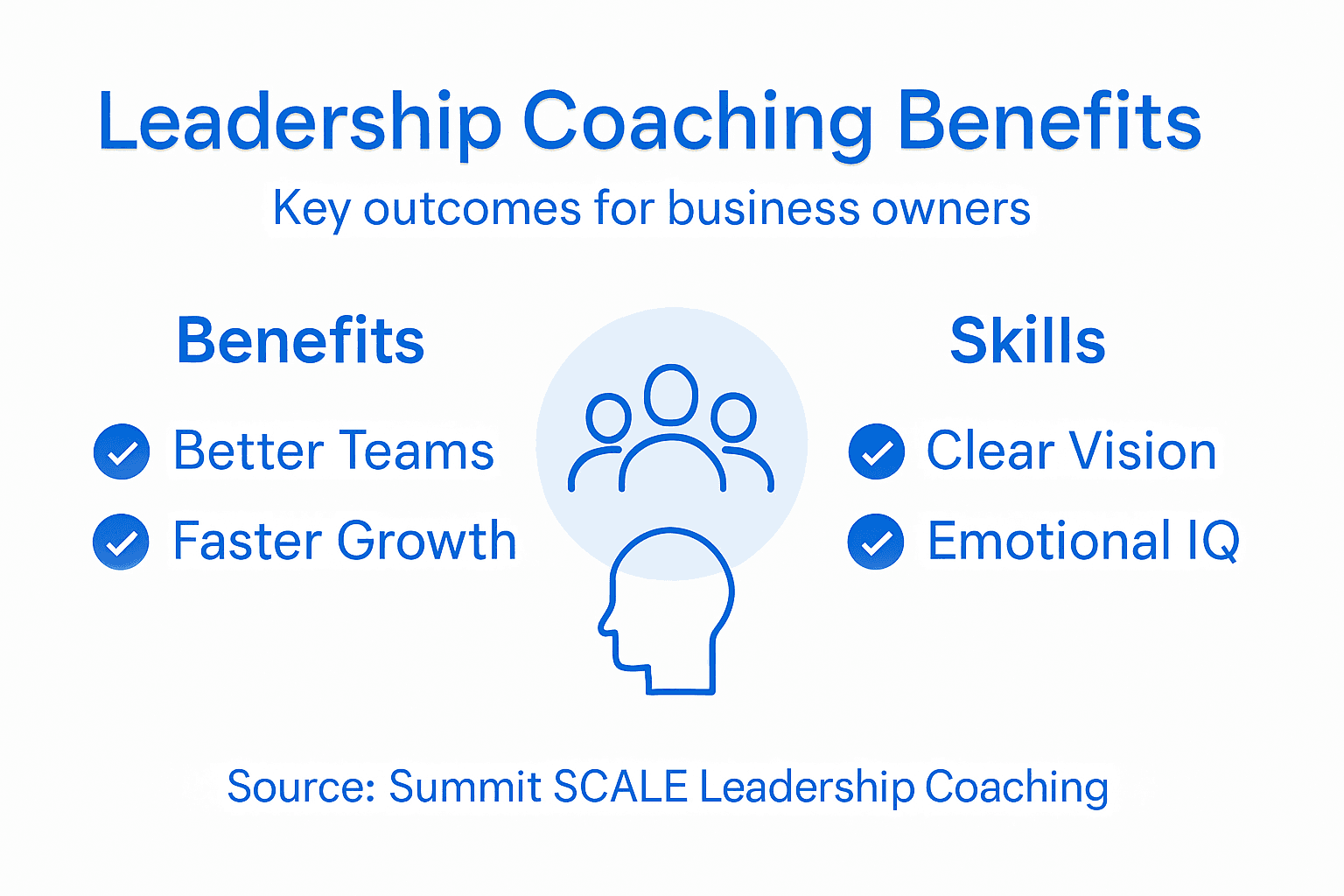
Critical skills developed through leadership coaching include emotional intelligence, strategic thinking, communication effectiveness, change management, and personal resilience. Owners learn to recognise their leadership patterns, understand team dynamics, and create adaptive strategies that respond to complex business environments. The coaching process goes beyond traditional training by providing personalised insights, challenging existing mental models, and supporting leaders in developing more nuanced and flexible leadership approaches.
Pro Tip: Create a personal leadership development journal to track your coaching insights and monitor your progressive skill transformation.
Key Benefits for Business Owners
Leadership coaching offers transformative advantages that extend far beyond traditional business consulting. Business coaching outcomes demonstrate significant improvements in operational efficiency, strategic decision-making, and overall organisational performance. Business owners who engage in professional coaching experience substantial benefits that directly impact their enterprise’s growth trajectory and personal leadership capabilities.

The primary benefits encompass enhanced strategic planning, improved leadership skills, and accelerated business performance. Coaching provides a structured approach to identifying and overcoming organisational challenges, enabling owners to develop more nuanced problem-solving strategies. Leadership skill development helps owners cultivate emotional intelligence, communication effectiveness, and adaptive leadership approaches that are crucial in today’s rapidly changing business landscape.
Specific tangible benefits include increased revenue potential, more effective team management, and personal growth in leadership capabilities. Owners gain valuable insights into their leadership styles, learn to navigate complex organisational dynamics, and develop frameworks for sustainable business growth. The coaching process creates a supportive environment that challenges existing mental models, encourages innovative thinking, and provides personalised strategies for overcoming business obstacles.
Pro Tip: Allocate dedicated time for reflecting on your coaching insights and systematically implementing learned strategies into your business operations.
Risks, Misconceptions, and Limitations
Leadership coaching, while powerful, is not a universal solution that guarantees instant business transformation. Coaching critical perspectives reveal important limitations and potential risks that business owners must carefully consider before investing in coaching programmes. Understanding these nuanced challenges helps create realistic expectations and more effective engagement with coaching interventions.
Common misconceptions include the belief that coaching provides immediate, miraculous results or functions as a quick fix for complex organisational challenges. In reality, coaching requires significant commitment, personal vulnerability, and willingness to challenge existing mental frameworks. Potential risks involve potential resistance from leadership teams, emotional discomfort during deep personal reflection, and the possibility that ingrained organisational cultures might impede meaningful change.
Some specific limitations stem from variations in coach quality, client receptiveness, and organisational context. Not all coaches possess equivalent expertise, and the effectiveness of coaching depends heavily on the chemistry between coach and client, the coach’s understanding of specific industry dynamics, and the client’s genuine openness to personal growth. Organisations must carefully evaluate potential coaching partnerships, ensuring alignment with their specific strategic objectives and cultural requirements.
Pro Tip: Conduct thorough due diligence by requesting detailed references and examining a potential coach’s track record before committing to a long-term coaching engagement.
Selecting the Right Leadership Coach
Choosing the ideal leadership coach requires a strategic and methodical approach that goes beyond superficial credentials. Role of Executive Coaching demands careful evaluation of a potential coach’s professional background, industry expertise, and proven track record of driving meaningful organisational transformation. Business owners must look beyond marketing materials and dig deeper into a coach’s substantive capabilities and alignment with their specific business context.
Key selection criteria should encompass multiple dimensions: professional qualifications, demonstrated expertise in your specific industry, proven coaching methodologies, and a track record of successful client outcomes. Potential coaches should demonstrate deep understanding of business dynamics, possess robust communication skills, and show ability to challenge existing mental frameworks constructively. Compatibility in communication style, personal chemistry, and shared strategic vision are equally critical factors that determine coaching effectiveness.
The selection process involves comprehensive due diligence, including detailed interviews, reference checks, and preliminary consultation sessions. Business owners should request concrete case studies, seek testimonials from previous clients, and evaluate the coach’s approach to personalisation and strategic problem-solving. A genuinely effective leadership coach will not merely provide generic advice but will craft bespoke strategies that address the unique challenges and opportunities within your specific business ecosystem.
Here is a summary of critical success factors when selecting a leadership coach:
| Success Factor | Why It Matters | Example of Strong Evidence |
|---|---|---|
| Industry-Specific Expertise | Ensures relevant, practical guidance | Case studies from similar fields |
| Communication Style Fit | Enables constructive coaching dialogue | Clear, adaptive communication |
| Track Record | Indicates proven ability to deliver | Documented client outcomes |
| Customisation Approach | Addresses unique business challenges | Bespoke coaching programmes |
Pro Tip: Request a preliminary diagnostic assessment from potential coaches to evaluate their ability to understand your specific business context and leadership challenges.
Elevate Your Leadership to Unlock Lasting Business Growth
Every business owner faces the daunting challenge of aligning leadership skills with strategic growth goals while managing complex organisational dynamics. This article highlights common pain points such as limited emotional intelligence, unclear decision-making strategies, and the struggle to foster sustainable development within your enterprise. At Summit SCALE, we understand these challenges and specialise in personalised business coaching that targets exactly those areas. Our tailored approach supports you in developing adaptive leadership, refining communication effectiveness, and crafting long-term strategies that drive profitability and freedom.
By connecting proven coaching methods with your unique business context Summit SCALE empowers you to transform obstacles into growth opportunities. Discover how our business coaching services can help you overcome limiting leadership patterns and accelerate your business performance. Embrace a coaching partnership that delivers measurable results and deeper personal growth tailored for your journey.
Ready to step beyond theory and unlock real progress?
Elevate your leadership today with a free 15-minute assessment call. Take the first step towards mastering strategic decision-making and creating the sustainable business you envision.
Visit Summit SCALE now to schedule your free call and start transforming your leadership and business outcomes.
Frequently Asked Questions
What is leadership coaching?
Leadership coaching is a personalised development process designed specifically for business owners. It focuses on unlocking their unique potential through targeted guidance and reflective practices, enabling them to navigate business challenges with clarity and confidence.
What types of coaching are available for business owners?
Business owners can engage in various types of coaching, including executive coaching (focusing on high-level skills), business coaching (organizational performance), performance coaching (skill enhancements), and strategic leadership coaching (long-term vision and adaptability).
What skills can be developed through leadership coaching?
Leadership coaching helps develop critical skills such as emotional intelligence, strategic thinking, effective communication, change management, and personal resilience. This fosters a more adaptive leadership style and better decision-making abilities.
What are the benefits of leadership coaching for my business?
Engaging in leadership coaching can lead to strategic planning improvements, enhanced leadership skills, increased revenue potential, and overall better business performance. It allows owners to gain insights into their leadership styles and navigate complex dynamics effectively.

