
Most british and American business owners are discovering that traditional coaching models no longer keep pace with rapid change. With over 40 percent of organisations now adopting data-driven coaching practices globally, the shift toward personalised, technology-enhanced professional development is impossible to ignore. This guide highlights the cutting-edge coaching trends, innovative platforms, and wellbeing-focused strategies that will help small and medium enterprises drive measurable growth and operational efficiency by 2026.
Table of Contents
- Defining Business Coaching Trends For 2026
- Key Innovations: Ai, Digital And Hybrid Coaching
- Popular Niches And Specialised Coaching Approaches
- Holistic And Wellbeing-Focused Coaching Methods
- Cost, Return On Investment, And Measurability
- Common Pitfalls And Mistakes To Avoid
Key Takeaways
| Point | Details |
|---|---|
| Evolution of Business Coaching | Business coaching is transitioning to a data-driven, personalised approach that prioritises adaptive leadership capabilities, emotional intelligence, and resilience. |
| Technological Innovations | AI, digital platforms, and hybrid methodologies are transforming coaching, promoting personalised experiences and greater flexibility for professionals. |
| Specialised Coaching Niches | Emerging niches like technology leadership and sustainability coaching focus on tailored strategies to enhance organisational performance and adaptability. |
| Measuring Coaching Effectiveness | Organisations should evaluate coaching investments through comprehensive metrics that capture both qualitative and quantitative impacts on performance. |
Defining Business Coaching Trends for 2026
Business coaching in 2026 represents a strategic evolution beyond traditional performance management, transforming into a sophisticated ecosystem of personalised professional development. Emerging global research from coaching organisations suggests a profound shift towards more holistic, data-driven coaching methodologies that address complex organisational challenges.
The contemporary business coaching landscape is characterised by three critical dimensions: technological integration, psychological adaptability, and measurable strategic outcomes. Coaches are increasingly utilising advanced diagnostic tools, psychological assessment frameworks, and predictive analytics to deliver targeted interventions that go far beyond conventional mentoring approaches. This trend signals a move from generic advice to precision-engineered professional growth strategies tailored to individual business contexts.
Specifically, business coaching in 2026 will prioritise developing adaptive leadership capabilities, emphasising resilience, emotional intelligence, and strategic agility. Bibliometric analyses of coaching trends indicate a growing focus on sustainable leadership practices that enable organisations to navigate increasingly complex and unpredictable business environments. These approaches blend psychological insights with practical strategic planning, creating comprehensive development frameworks that address both individual potential and organisational objectives.
Pro tip: When selecting a business coach in 2026, prioritise professionals who demonstrate technological literacy, psychological depth, and a proven track record of measuring tangible business outcomes.
Key Innovations: AI, Digital and Hybrid Coaching
Emerging technological innovations are fundamentally reshaping business coaching paradigms, creating a sophisticated ecosystem where artificial intelligence, digital platforms, and hybrid methodologies converge to deliver unprecedented professional development experiences. These transformative approaches transcend traditional coaching boundaries, offering small and medium enterprises unprecedented opportunities for personalised, scalable learning and strategic growth.
AI-powered coaching technologies are revolutionising professional development by introducing hyper-personalised learning pathways that dynamically adapt to individual performance metrics and psychological profiles. Advanced research on peer coaching trends indicates that machine learning algorithms can now analyse communication patterns, emotional intelligence indicators, and strategic decision-making capabilities, providing coaches with granular insights that enable more targeted and effective interventions.

The hybrid coaching model represents a critical innovation, blending synchronous virtual interactions with asynchronous digital learning modules. This approach recognises that modern professionals require flexible, on-demand coaching experiences that integrate seamlessly with their complex work environments. By combining human expertise with technological infrastructure, hybrid coaching platforms can deliver contextualised guidance, real-time feedback, and continuous professional development across geographical and organisational boundaries.
Pro tip: When exploring AI and digital coaching solutions, prioritise platforms that offer transparent algorithmic insights and maintain a strong human-centric approach to professional development.
Below is a summary of the main innovations impacting business coaching in 2026:
| Innovation Area | Key Features | Benefits for Organisations | Implementation Challenge |
|---|---|---|---|
| Artificial Intelligence | Predictive analytics, personalised pathways | Granular insights, scalable coaching | Requires data security measures |
| Digital Platforms | On-demand modules, flexible access | Continuous feedback, remote collaboration | Needs robust technical support |
| Hybrid Methodologies | Blend of virtual and in-person coaching | Contextual guidance, seamless integration | Synchronising schedules across regions |
Popular Niches and Specialised Coaching Approaches
Global coaching research reveals a profound transformation in business coaching, with specialised approaches emerging as a critical differentiator in professional development. Rather than offering generic guidance, modern coaching has evolved into a nuanced discipline that addresses specific organisational and individual needs through targeted, expertly crafted interventions.
The landscape of specialised coaching niches encompasses diverse domains, including executive leadership development, organisational culture transformation, wellbeing optimisation, and sector-specific performance enhancement. Advancing coaching scholarship indicates a growing recognition that one-size-fits-all approaches are increasingly inadequate in addressing the complex challenges faced by contemporary businesses. These specialised coaching methodologies leverage deep domain expertise, psychological insights, and targeted strategic frameworks to deliver precisely calibrated professional development experiences.
Crucial niches emerging in 2026 include technology leadership coaching, sustainability transformation coaching, and digital resilience coaching. These specialised approaches go beyond traditional skill development, focusing on holistic capabilities that enable business leaders to navigate increasingly complex and rapidly changing professional ecosystems. By integrating psychological assessment, technological understanding, and strategic foresight, these coaching models provide comprehensive support that addresses both individual potential and organisational adaptation requirements.
Pro tip: When selecting a specialised business coach, prioritise practitioners with demonstrable expertise in your specific industry and a proven track record of delivering measurable, contextualised developmental outcomes.
This table compares emerging specialised coaching niches and their organisational advantages:
| Coaching Niche | Strategic Focus | Organisational Impact |
|---|---|---|
| Technology Leadership Coaching | Digital transformation skills | Equips leaders for innovation |
| Sustainability Transformation Coaching | Ethical business practices | Improves long-term resilience |
| Digital Resilience Coaching | Adaptive mindset, cyber security | Enhances operational continuity |
Holistic and Wellbeing-Focused Coaching Methods
Emerging coaching leadership research reveals a transformative approach to professional development that integrates emotional intelligence, psychological resilience, and comprehensive personal growth strategies. This holistic methodology recognises that business performance is intrinsically linked to an individual’s overall mental, emotional, and physical wellbeing, moving far beyond traditional performance-driven coaching models.
Wellbeing-focused coaching approaches emphasise a multidimensional framework that addresses professional challenges through a lens of personal sustainability. These methods incorporate advanced psychological techniques, mindfulness practices, stress management strategies, and personalised development plans that simultaneously nurture individual potential and organisational effectiveness. By treating professionals as complex, interconnected beings rather than mere productivity units, these coaching strategies unlock profound opportunities for authentic personal and professional transformation.
Key elements of holistic coaching in 2026 include integrated wellness assessments, emotional intelligence development, and sustainable performance frameworks. These approaches go beyond conventional metrics, focusing on building adaptive resilience, cultivating intrinsic motivation, and creating personalised developmental pathways that align professional growth with individual values and psychological wellbeing. Such comprehensive methodologies recognise that true professional excellence emerges from a foundation of personal balance, self-awareness, and intentional personal development.
Pro tip: Select a coaching programme that offers comprehensive wellness assessments and demonstrates a genuine commitment to your holistic personal and professional development, not just narrow performance indicators.
Cost, Return on Investment, and Measurability
Global coaching research reveals a sophisticated approach to evaluating business coaching investments, moving beyond traditional cost-based assessments to comprehensive value measurement frameworks. Modern organisations recognise that coaching represents a strategic investment with multifaceted returns that extend far beyond immediate financial metrics, encompassing organisational culture, leadership development, and sustainable performance improvement.
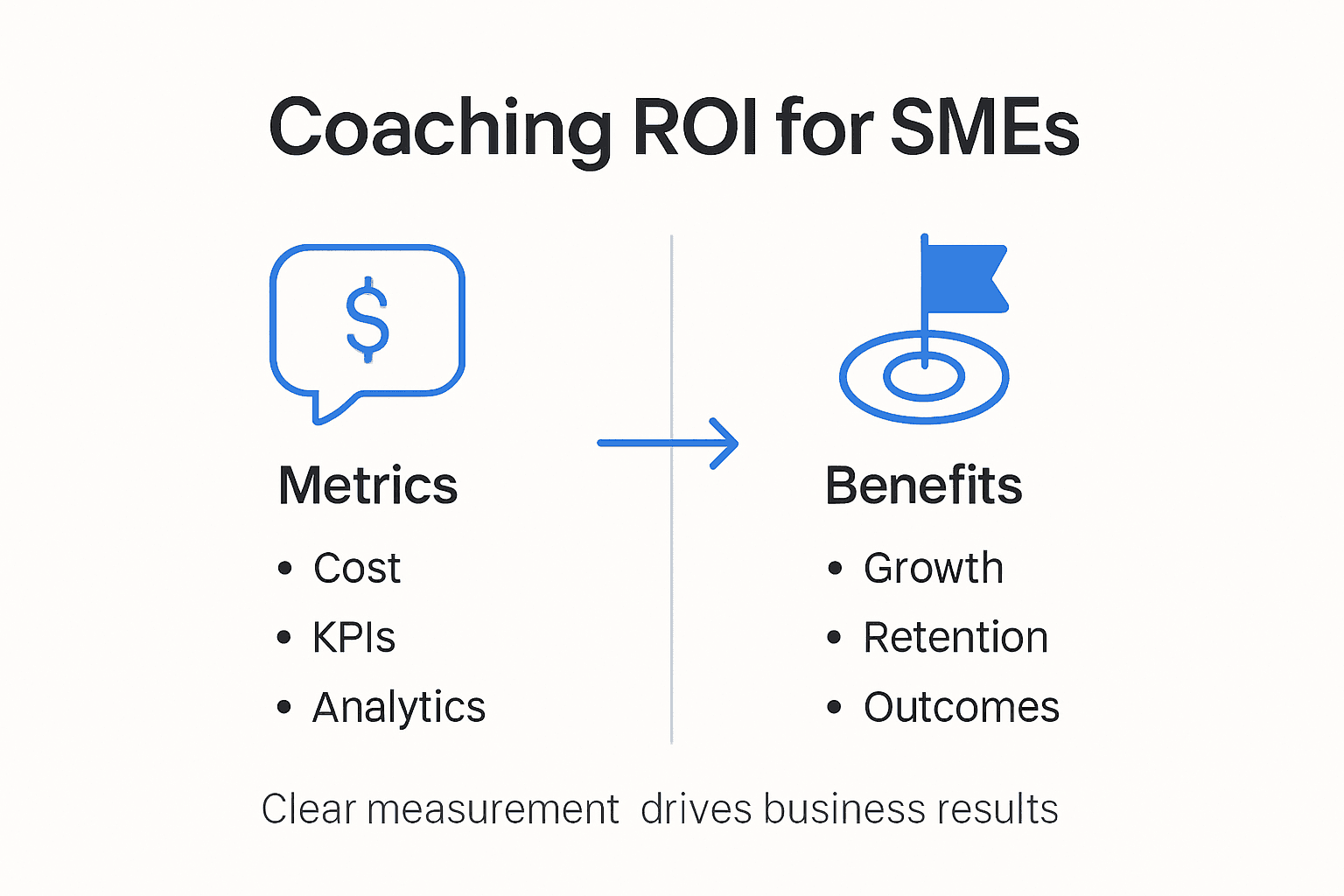
The measurement of coaching effectiveness involves a nuanced set of key performance indicators that capture both quantitative and qualitative organisational transformation. These metrics include productivity gains, employee engagement levels, leadership capability enhancement, strategic adaptability, and individual professional growth trajectories. By employing sophisticated diagnostic tools and longitudinal tracking methodologies, businesses can now quantify the precise impact of coaching interventions with unprecedented accuracy and depth.
Critical components of robust coaching investment evaluation include predictive performance analytics, comparative baseline assessments, and longitudinal development tracking. These approaches enable organisations to understand not just the immediate financial return, but the long-term strategic value generated through targeted professional development. Advanced coaching programmes now integrate data-driven insights, psychological assessment frameworks, and continuous feedback mechanisms to provide transparent, measurable evidence of their transformative potential.
Pro tip: Request a comprehensive ROI framework from potential coaching providers that demonstrates clear, measurable outcomes across multiple organisational performance dimensions.
Common Pitfalls and Mistakes to Avoid
Comprehensive workplace coaching research highlights critical systemic errors that can undermine the effectiveness of business coaching interventions. Small and medium enterprises frequently encounter predictable challenges that, if left unaddressed, can transform potentially transformative coaching experiences into costly, ineffective exercises with minimal organisational impact.
Three primary categories of coaching pitfalls emerge consistently across professional development landscapes. First, misaligned expectations create significant barriers, where businesses and coaches fail to establish clear, measurable objectives. Second, insufficient diagnostic processes prevent organisations from understanding their genuine developmental requirements, leading to generic, ineffective coaching strategies. Third, weak implementation frameworks compromise the potential for meaningful organisational transformation, resulting in fragmented, disconnected coaching experiences.
Specifically, common mistakes include selecting coaches without rigorous credential verification, neglecting to establish precise performance metrics, failing to integrate coaching insights into broader organisational strategies, and treating coaching as a transactional rather than transformational process. Successful coaching interventions demand a holistic approach that combines individual psychological assessment, strategic organisational alignment, and continuous feedback mechanisms to create sustainable professional development pathways.
Pro tip: Before engaging a business coach, conduct a comprehensive due diligence process that includes validated credential checks, detailed methodology reviews, and clear articulation of expected measurable outcomes.
Empower Your SME Growth with Next-Generation Business Coaching
The landscape of business coaching in 2026 is evolving rapidly with trends like AI integration, adaptive leadership, and holistic wellbeing strategies reshaping how small and medium enterprises thrive. Many business owners feel challenged by navigating this complexity while aiming to build resilience, enhance leadership, and measure real return on investment. If you are seeking to overcome misaligned expectations or generic coaching approaches, it is vital to partner with experts who understand these emerging coaching paradigms and offer tailored, measurable solutions.
At Summit SCALE, we specialise in guiding entrepreneurs through strategic growth steps including sales expansion, team building, and cost control — all crafted to deliver more time, money, and freedom in your life. Our personalised business coaching fully embraces data-driven insights, psychological depth, and sustainable leadership development featured in the latest coaching research. Discover how our approach can transform your business by visiting Summit SCALE.
Ready to transform your business with coaching that reflects 2026’s leading trends?
Take the first step to achieve measurable growth and long-term business freedom with a free 15-minute assessment call. Explore our proven methods for scaling successful small to medium enterprises at https://summitscale.biz. Your journey towards strategic leadership and personal empowerment starts now.
Frequently Asked Questions
What are the key trends shaping business coaching in 2026?
Business coaching in 2026 is being shaped by technological integration, psychological adaptability, and measurable strategic outcomes. Coaches are increasingly utilising advanced tools and frameworks to provide personalised growth strategies tailored to individual business contexts.
How does artificial intelligence impact business coaching?
AI is revolutionising business coaching by introducing personalised learning pathways that adapt to individual performance metrics and psychological profiles. This allows for more targeted and effective coaching interventions based on granular insights.
What are some popular specialised coaching niches for SMEs?
Niches such as technology leadership coaching, sustainability transformation coaching, and digital resilience coaching are emerging as critical areas of focus. These methods address specific organisational and individual needs to drive growth and adaptability in today’s complex business environments.
How can SMEs measure the return on investment from coaching programmes?
SMEs can measure the ROI of coaching through key performance indicators, including productivity gains, employee engagement levels, and leadership capability enhancement. Using diagnostic tools and tracking methodologies helps quantify the impact of coaching interventions accurately.
Recommended
- 4 Trends Influencing the Growth of SMEs in 2025 – Summit Scale
- Role of Coaching in Profitability: Unlocking Business Potential
- Coaching Business Owners Across the World | Summit SCALE®
- Business coaching vs Executive coaching | Summit SCALE
- Effective Business Growth Strategies Guide for 2025 | Reddog Consulting Group

